You are currently browsing the category archive for the ‘Miscellaneous’ category.
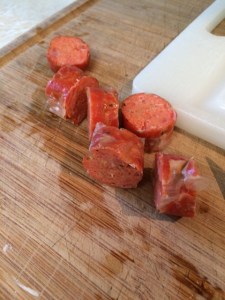
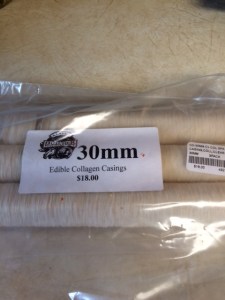
I had never made sausages in casings before and I’d never eaten salmon sausage before. It’s an adventure. So, I went to Alaska Butcher Supply and bought collagen casings (30mm) and a sausage stuffing funnel that looked like it would fit my sausages. The casings are a size one would use to make hotdogs or bratwurst. They are dry casings that do not require soaking before stuffing. I could have tied knots in the casings themselves, but I used string to tie the ends.
 Ingredients
1.5 to 2# raw salmon, deboned (mostly salmon bellies)
1.5 cups raw zucchini cubes (do not peel)
1 Tbsp. salt
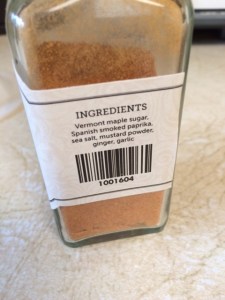
Seasoning (I used a couple tablespoons of Summit Seasonings Smoky Maple Salmon Rub), but next time I’ll try more spice (red pepper flakes) and maybe some mustard seed. A little more salt, too.
I used a Cuisinart to grind all the ingredients together into a rough paste. Then I wet my hands and started stuffing the sausages. Never again by hand. Never. It was such a chore. Part of the problem was that I did not have a utensil to move the meat down the stuffer tube. Once I figured out that my finger worked best, things went a little faster. Never again. I’m probably going to invest in a sausage stuffing attachment for my KitchenAid mixer.
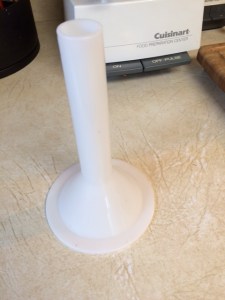
I kept the sausages refrigerated for several hours and then set them out on a plate with paper towels for an hour or so. The temperature change from my kitchen to the refrigerator had caused them to sweat a little and I wanted them to be dry.

Then my husband went out to smoke my regular salmon and he put the sausages on the bottom of the smoker where it is hottest. It took about three and a half hours. Our smoker runs really hot.
 I will say that my sausages are beautiful. They are also tasty, but a little too mild for me. Next time, spice it up!
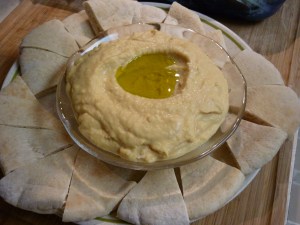
The hummus recipe is based upon one found here.
Hummus Recipe
1 16 oz can garbanzo beans
1/4 cup liquid from can of garbanzo beans
4 tablespoons lemon juice
1 1/2 tablespoons tahini
2 cloves garlic, crushed
1/2 teaspoon salt
2 tablespoons olive oil
Drain garbanzo beans and set aside liquid from can. Combine remaining ingredients in blender or food processor. Add 1/4 cup of liquid from garbanzos. Blend for a few minutes on low until thoroughly mixed and smooth.

Place in serving bowl, and create a well in the middle. Pour a small amount of olive oil into the well.
Serve with pita bread.
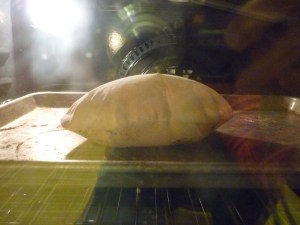
The pita bread recipe is based upon one found at Under The High Chair.
Pita Bread Recipe
1 tablespoon yeast
1 ¼ cup warm water
1 teaspoon salt
3- 3 ½ cups flour
Dissolve yeast in warm water in the bowl of an electric mixer. Add salt and 1 ½ cups flour. With the dough hook, beat well to make a batter. Add additional flour until a rough, shaggy mass is formed. Let it knead for about 8 minutes until dough is smooth and elastic. Add more flour if it is too sticky. The dough will rise AFTER you’ve formed the flat loaves. Go straight to forming now.
Turn dough onto a lightly floured surface and divide into six pieces for large pitas or ten for smaller. Form dough into balls, then flatten with a rolling pin into ¼ inch thick discs. Try and keep an even thickness as this is what helps them puff. Note: Do not roll out on parchment paper or let them rest on parchment paper in an effort not to use too much flour. They stick! Flour is the way to go. Flour them.
Let rest on the floured surface 30-40 minutes until slightly puffy. By the time you are finished forming the last one, you may be quite close to starting to bake the first one. Get your oven going. It takes time.
Preheat oven AND baking sheet to 425F. Let the baking sheet sit inside the hot oven for about ten minutes after the preheating is finished. That baking sheet needs to be HOT! A high-quality (thicker) baking sheet will retain heat longer, but will take longer to heat at the beginning. I could totally be making that up, but I believe it.
With a large spatula, flip a well-floured round of dough upside down on the dry baking sheet. Bake 10-15 minutes until it’s puffed and light golden. I baked mine one at a time letting the baking sheet heat thoroughly between batches. I think two at a time would work, too.
If you have children or adult science buffs in the room, be prepared! Watching pita bread puff in the oven is really, really cool! A crowd could gather if you have a window in your oven door. Just sayin’. Learn to shout, “Step away from the oven now so I can remove the pita before it burns.”
I’m not telling you how to save your leftovers because these are so amazingly delicious that you will not have any leftovers.
Slice in half cross-wise and stuff with yummy sandwich ingredients or pile gyro ingredients on the top or slice into pie-shaped sections to serve as an appetizer with hummus. It’s all good!
 At the end of the most sunny summer on record, we had a glut of green tomatoes. These pickles are very mild, not too tangy and not too sweet. The recipe comes out of the book Preserving by Oded Schwartz (Dorling Kindersley, 1996), one of the most beautiful and useful books ever published. I had everything on-hand except the chiles.
2# green tomatoes
2-3 fresh or dried red chiles (I did not use)
a few sprigs fresh dill
2-3 bay leaves
1-1/2 Tbsp. mustard seed
1 Tbsp. peppercorns
4-5 cloves
4 cups cider vinegar
1/2 cup water
4 Tbsp. honey
1 Tbsp. salt
Lightly prick each tomato in several places with a wooden toothpick. Arrange in pint jars (I used four pint jars) with chiles, dill, bay leaves, and spices. In a saucepan, mix vinegar, water, honey, and salt. Bring to a boil and boil rapidly for 5 minutes, then remove from heat and let stand until warm. Pour warm vinegar mixture into the jars. Top with cold vinegar if you don’t have enough mixture to cover the tomatoes. Seal* and refrigerate. Tomatoes will be ready in a month, but improve after 2-3 months. Should last a year as long as it’s refrigerated.
*One thing that wasn’t clear in the recipe was how to “seal” the jars. Since they were to be refrigerated and because the brine is mostly vinegar, all I did was screw canning lids on tightly. So, I didn’t “seal” them by my definition, merely closed the lids. I think it will be just fine.
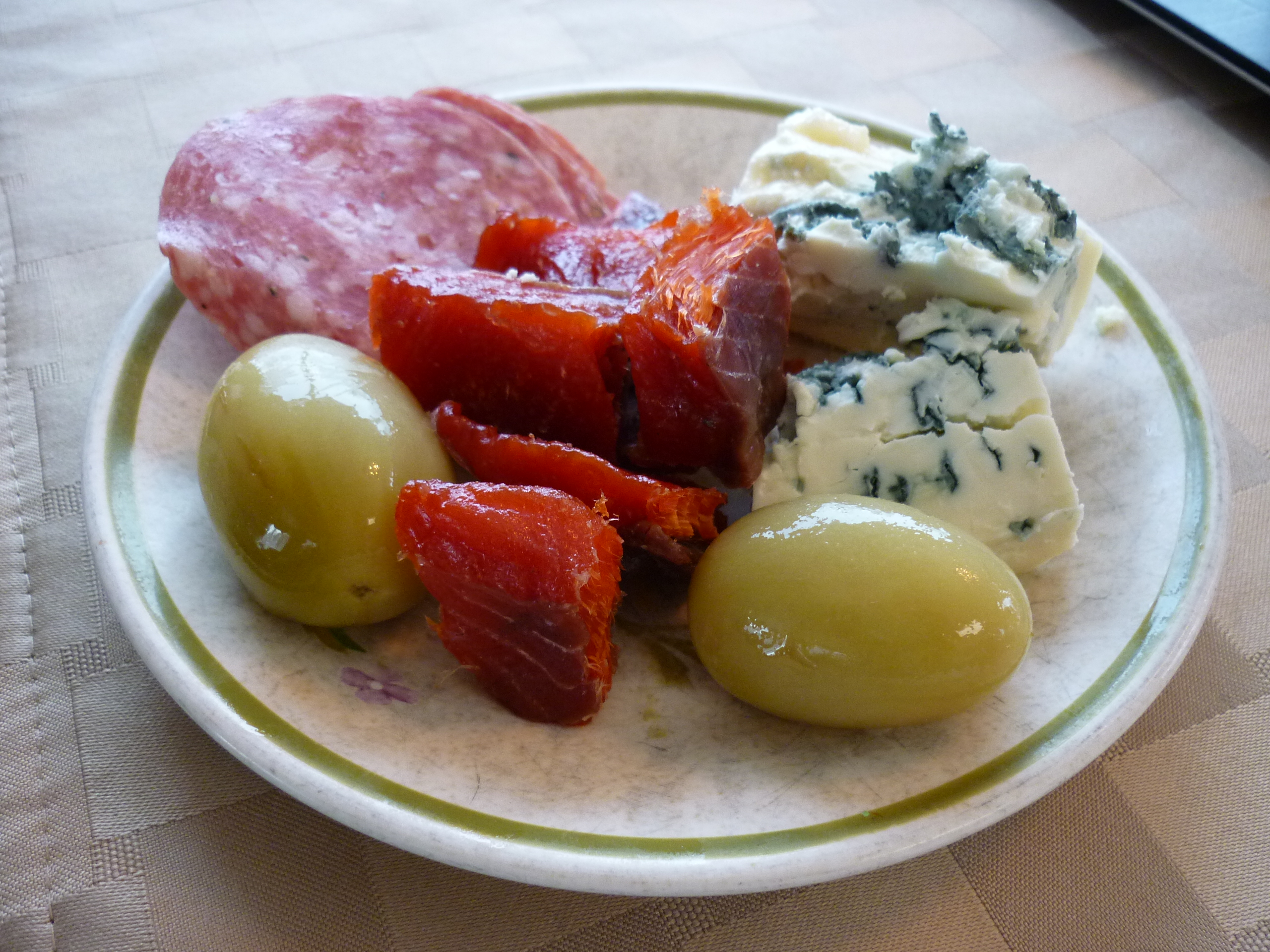
Those aren’t grapes, they’re green tomato pickles, along with smoked salmon, bleu cheese, and Italian dry salami. What a great snack!
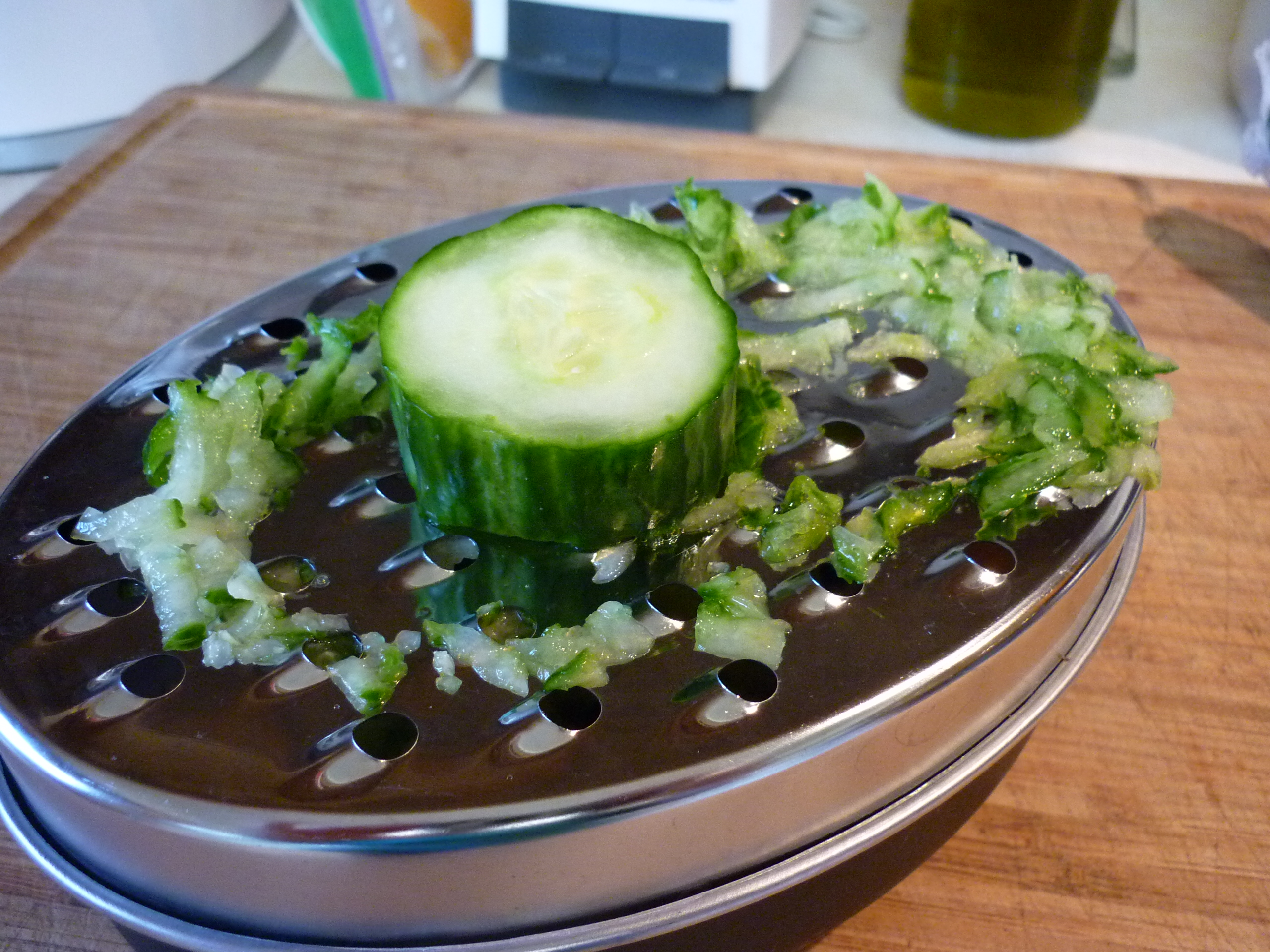
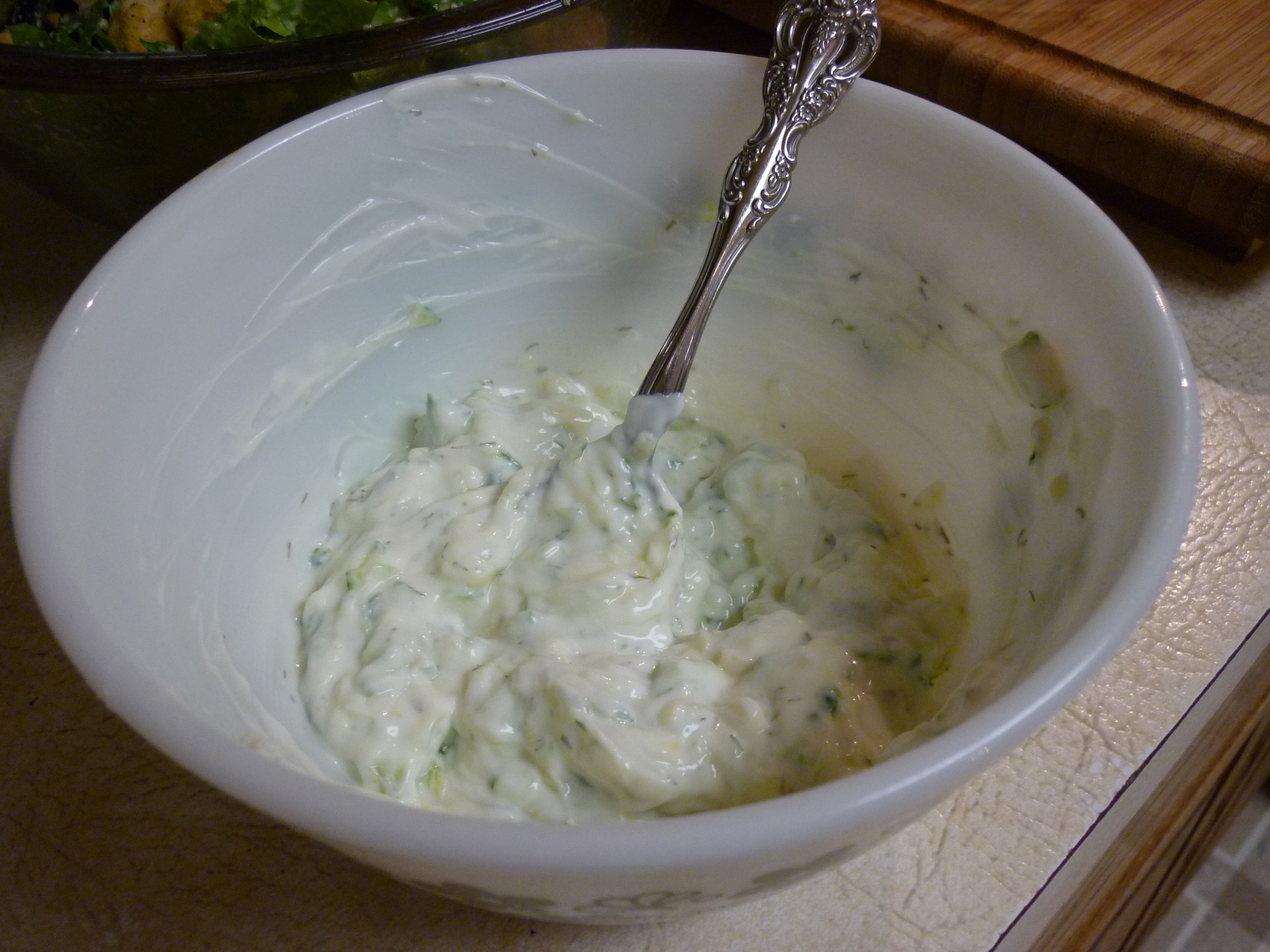 My husband grew cucumbers this summer and we do eat a lot of grilled lamb chops so I made this wonderful sauce frequently. It’s easy, but takes time for the cucumber to drain and the yogurt-garlic flavors to marry. Start by grating a 3″ piece of cucumber. Press out as much liquid as you can and let it sit in a strainer for several hours. I put my grated cucumber in a small strainer and set it in a small mixing bowl. I lightly cover it and put it into the refrigerator until I’m ready to finish the sauce.
After grating the cucumber and setting it aside to drain, the next step is to stir together 3/4 cup of plain Greek-style yogurt, 2 minced garlic cloves, 1 Tbsp. of olive oil, 1/2 tsp. of salt, and 1/2 Tbsp. of white wine vinegar (or white vinegar). If you do not have fresh dill, then add a sprinkle of dried dill weed and stir it in. If using fresh dill, wait until later to add it. Place the mixture in the refrigerator for several hours.
At serving time, stir the drained cucumber and a sprig of chopped fresh dill into the sauce.
This tastes great mixed with feta or not. Serve as a dip for pita bread or a sauce for lamb. It’s all good.

Make a 100% salt solution by dissolving salt, one tablespoon at a time, in hot water (not boiling, just hot from the tap) until the salt will no longer dissolve. It is not necessary to let the water cool before proceeding to the next step. The temperature does not matter. I use Canning & Pickling Salt because it has no additives.
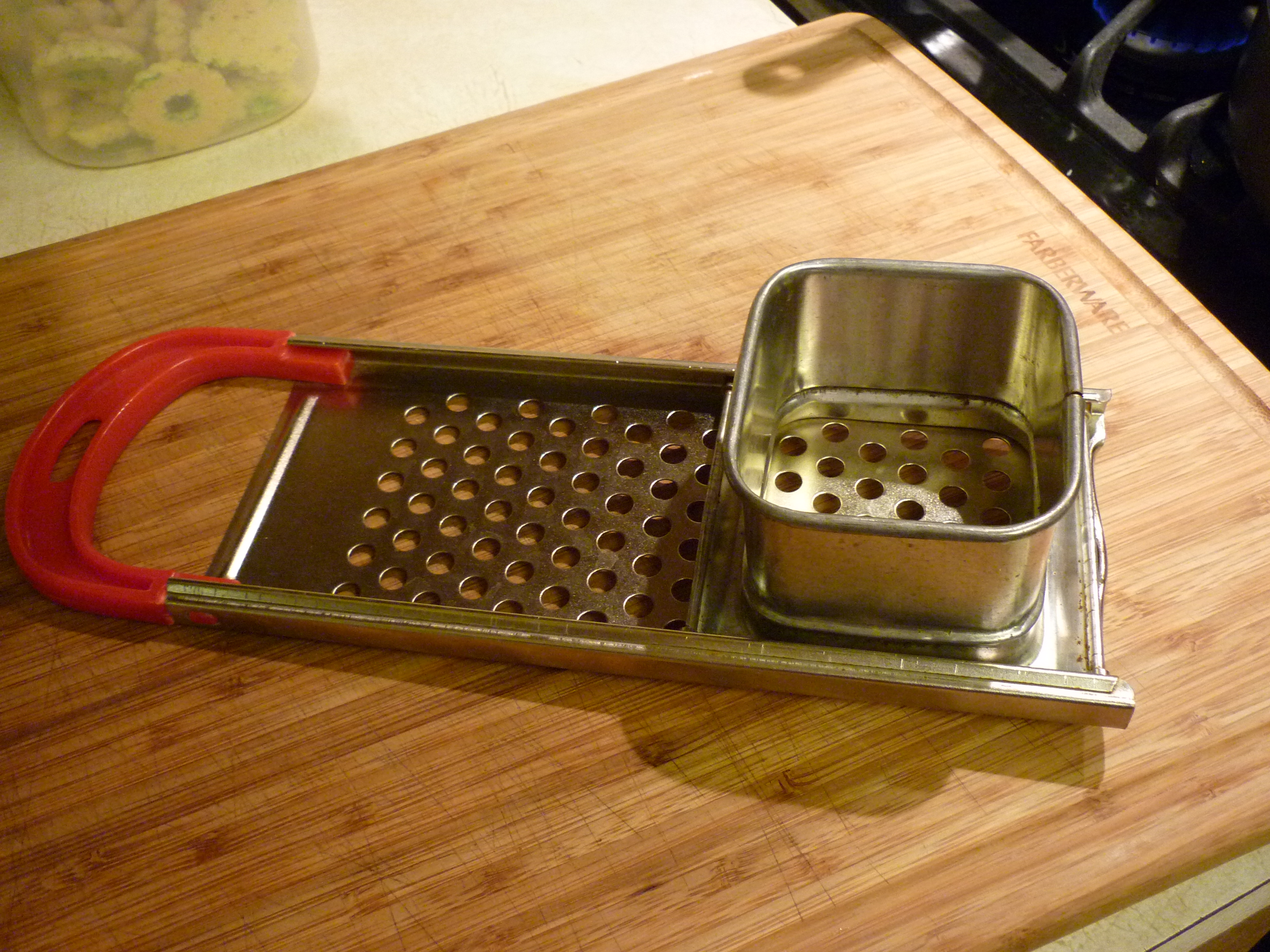
This is a Spaetzle Maker. Use only the grated part, not the cup, to remove the eggs from the membrane. Search “spaetzle” on this site for the recipe to make Spaetzle. You can buy a Spaetzle Maker at a housewares store.
We used Alaska red “sockeye” salmon roe. Using the grated part of a Spaetzle Maker over a bowl, rub a skein of fresh (only fresh will do) salmon roe across the grate, dislodging the eggs from the membrane.


Discard the membrane. Once you have as many loose eggs as you want, soak them in the salt solution for thirteen minutes while stirring. When we were making this for the first time we dislodged the eggs right into the bowl of salt solution (as pictured), but then our timing was off. Next time we will dislodge the eggs into an empty bowl and THEN when we have enough we’ll put it all into the salt solution at the same time and start the timer.

Strain the eggs out of the salt solution into a colander and run under cold water until it doesn’t taste too salty for you. We discarded our salt solution and filled that bowl with fresh water and let the salty roe sit in it for about 30 seconds, too. We grabbed a pinch of the roe and tasted it. It was good, so we stopped pouring fresh water on it. Let it continue to strain for awhile, but you can eat it right away. Tastes great with crackers and cream cheese. You can add flavorings like garlic or dill to the roe if you want to. In the refrigerator it will last for a few days. Once it had strained for an hour or so, I scooped it into small jars (previously used for pimientos, but baby food jars would work) and put them into the refrigerator. The next day it tasted even better!
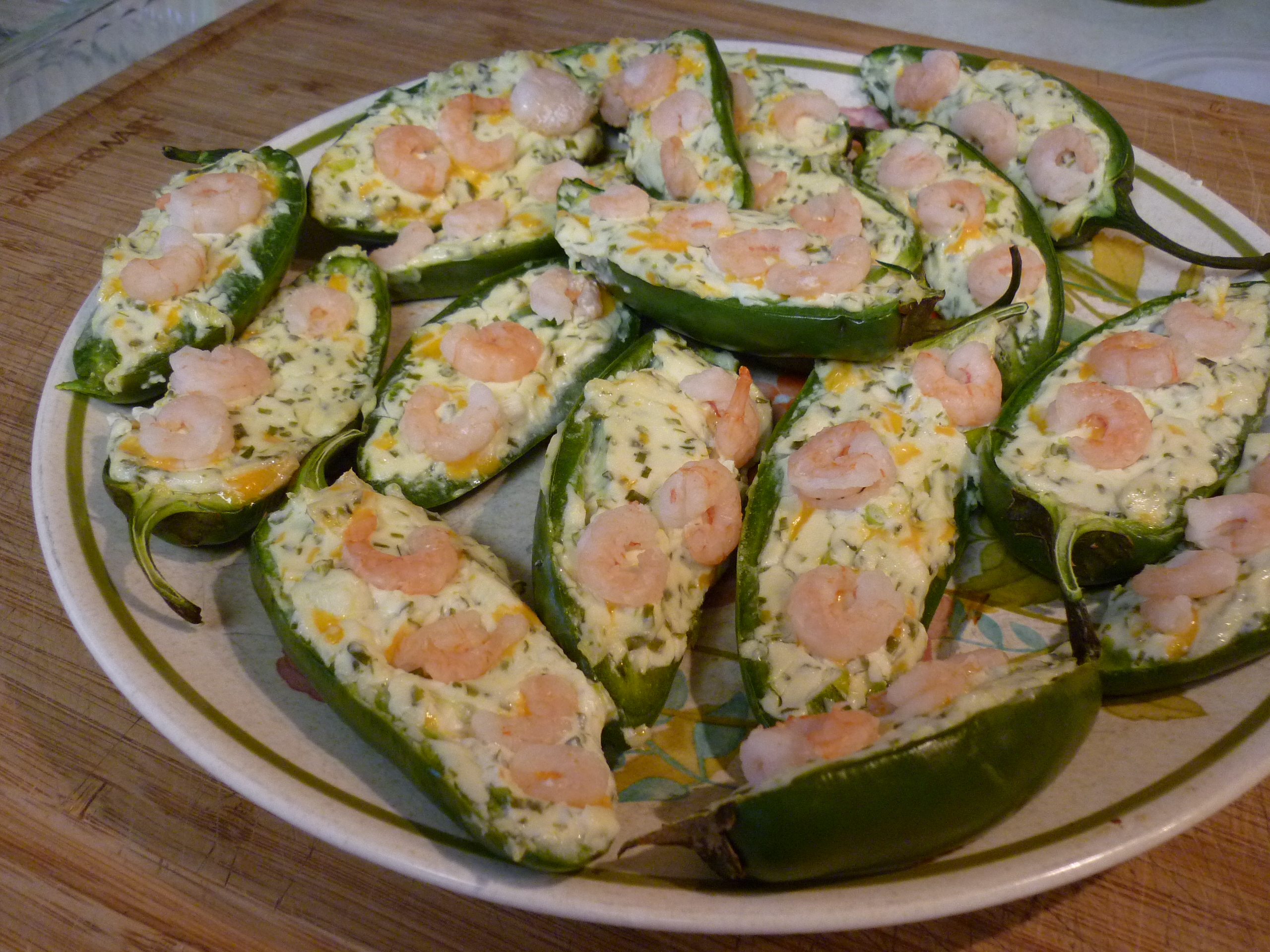 This recipe is based upon one found at Taste Of Home. I’ve never met anyone who didn’t like these very much. I like to serve these with enchiladas and rice.

Cut jalapeños in half lengthwise and scoop out the seeds into the trash. Place the jalapeños into an ungreased 15×10” baking pan or on a baking sheet.


In a small bowl combine 8-oz. container herb and onion cream cheese, 1/4 cup cheddar cheese and 1/4 cup chopped green onion.

Spoon into the jalapeño halves.
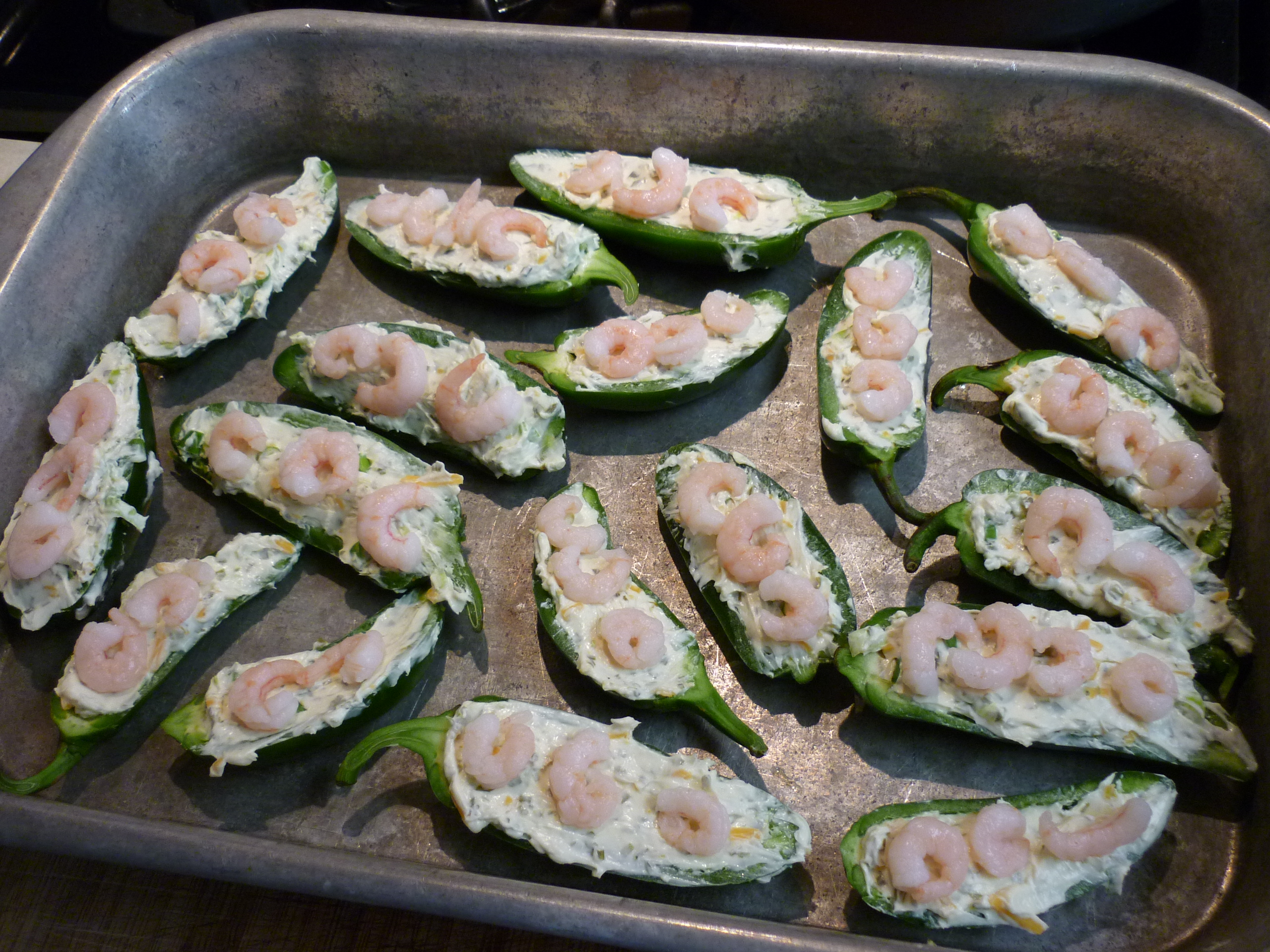
Top with shrimp in a decorative manner.
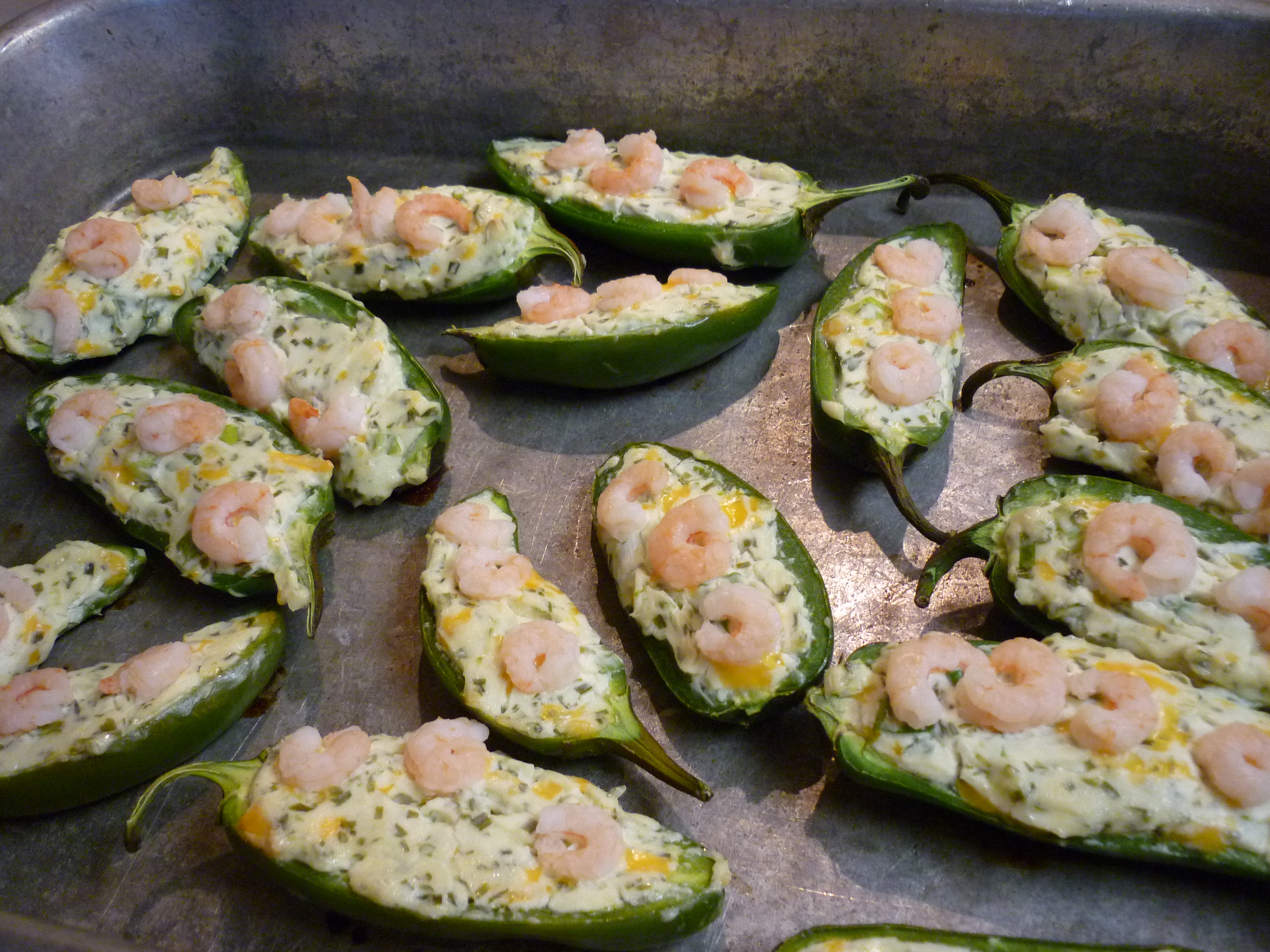
Bake at 400 degrees for 18-22 minutes or until jalapeños are tender. Yield 18 appetizers.
Jalapeño Cheese Boats Recipe
9 jalapeño peppers
1 8-oz. container spreadable herb and onion cream cheese
¼ cup shredded sharp cheddar cheese
¼ cup sliced green onions
¼# small cooked shrimp (salad shrimp)
Cut jalapeños in half lengthwise and scoop out the seeds into the trash. Place the jalapeños into an ungreased 15×10” baking pan or on a baking sheet. In a small bowl combine cream cheese, cheddar cheese and onions. Spoon into the jalapeño halves. Top with shrimp in a decorative manner. Bake at 400 degrees for 18-22 minutes or until jalapeños are tender. Yield 18 appetizers.
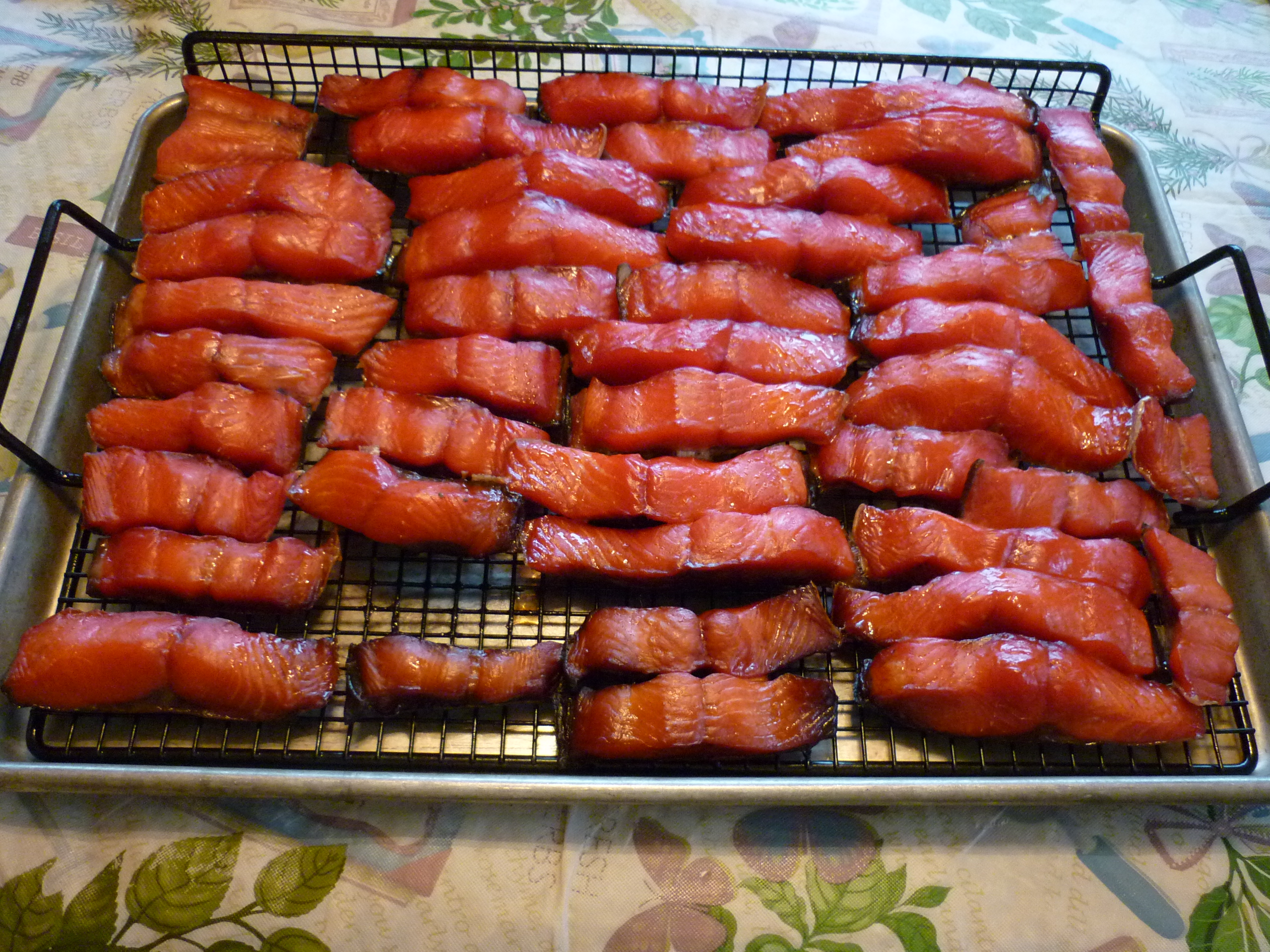
This smoked salmon method is really what most people know as kippered salmon. There is no liquid added, it is a dry brine, very sweet.

Work with salmon fillets. Cut the fillets across into strips about 1” wide.

In a large bowl, mix together 6 cups brown sugar and 1 cup salt. You can adjust the total amounts as long as you remember it’s 5 or 6 parts of brown sugar to 1 part salt. I use canning and pickling salt.
In a bucket or other container, layer sugar-salt mix with salmon.
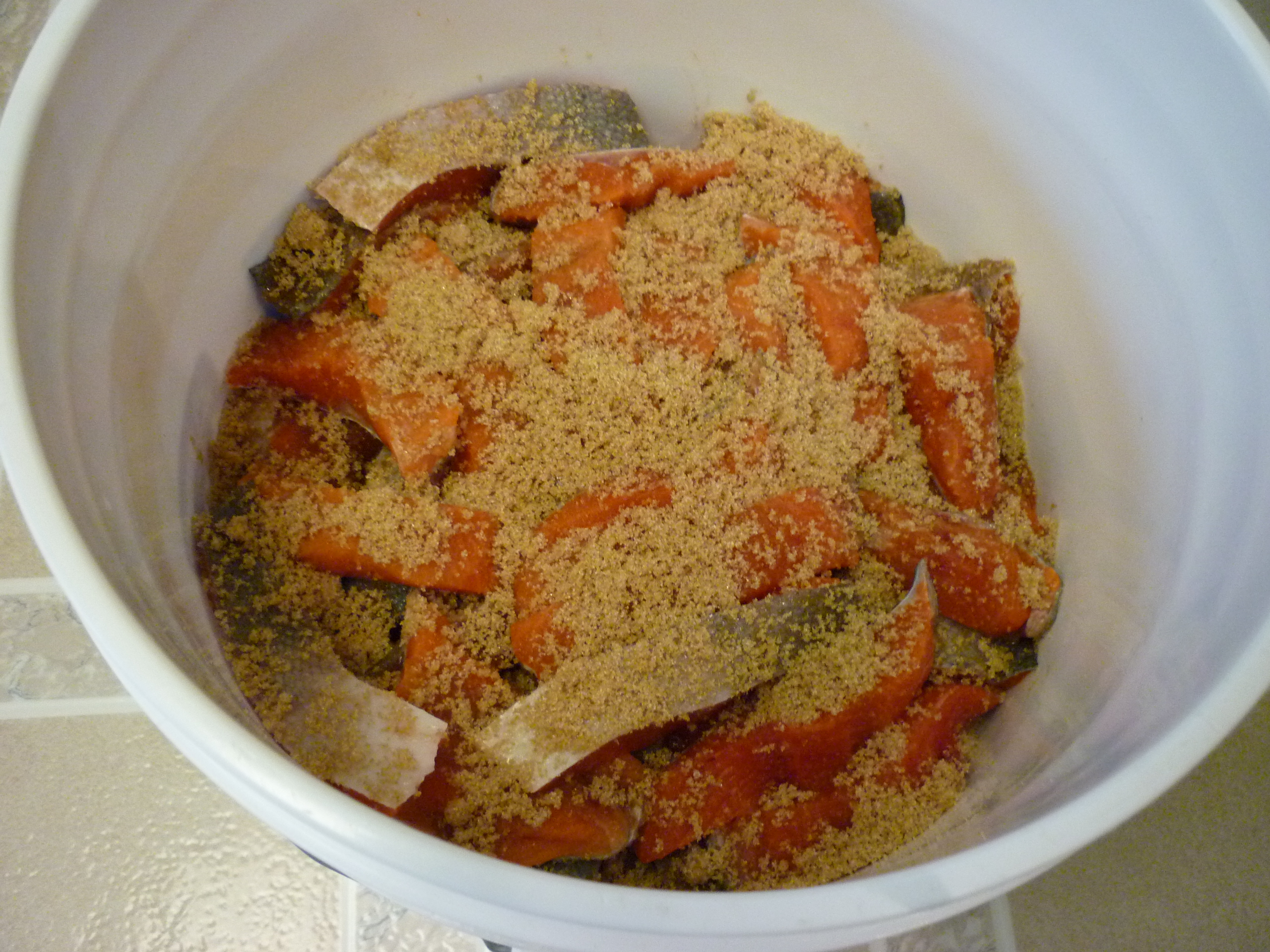
One layer at a time until all your fish is used up. Make sure sugar-salt is the top layer. Loosely cover and place in a cool spot for 24 hours or so. I put the bucket on the floor of my basement.

The salt draws out the moisture in the fish so that when you remove the lid the next day, the fish is submerged in liquid. Take the bucket to your work area (my kitchen table).

Draw a bowl of cool water and dip each piece of salmon into it, then place onto baking sheets covered with absorbent towels. Once all the fish is laid out, pat the tops dry with absorbent cloths.
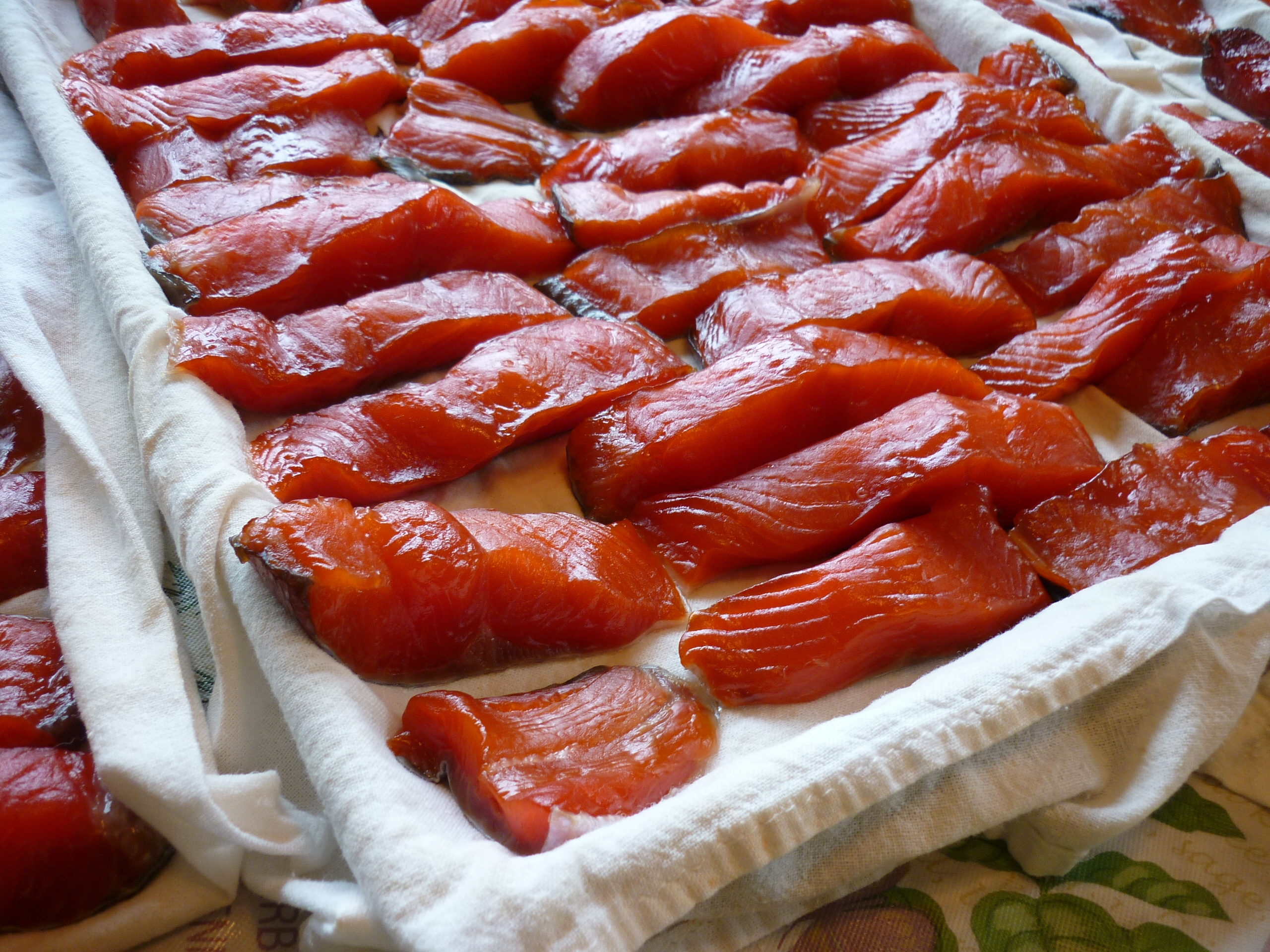
Let the fish sit, under a fan is best, for several hours while a skin develops. Beads of moisture should emerge from the fish, but don’t worry about it if it doesn’t.


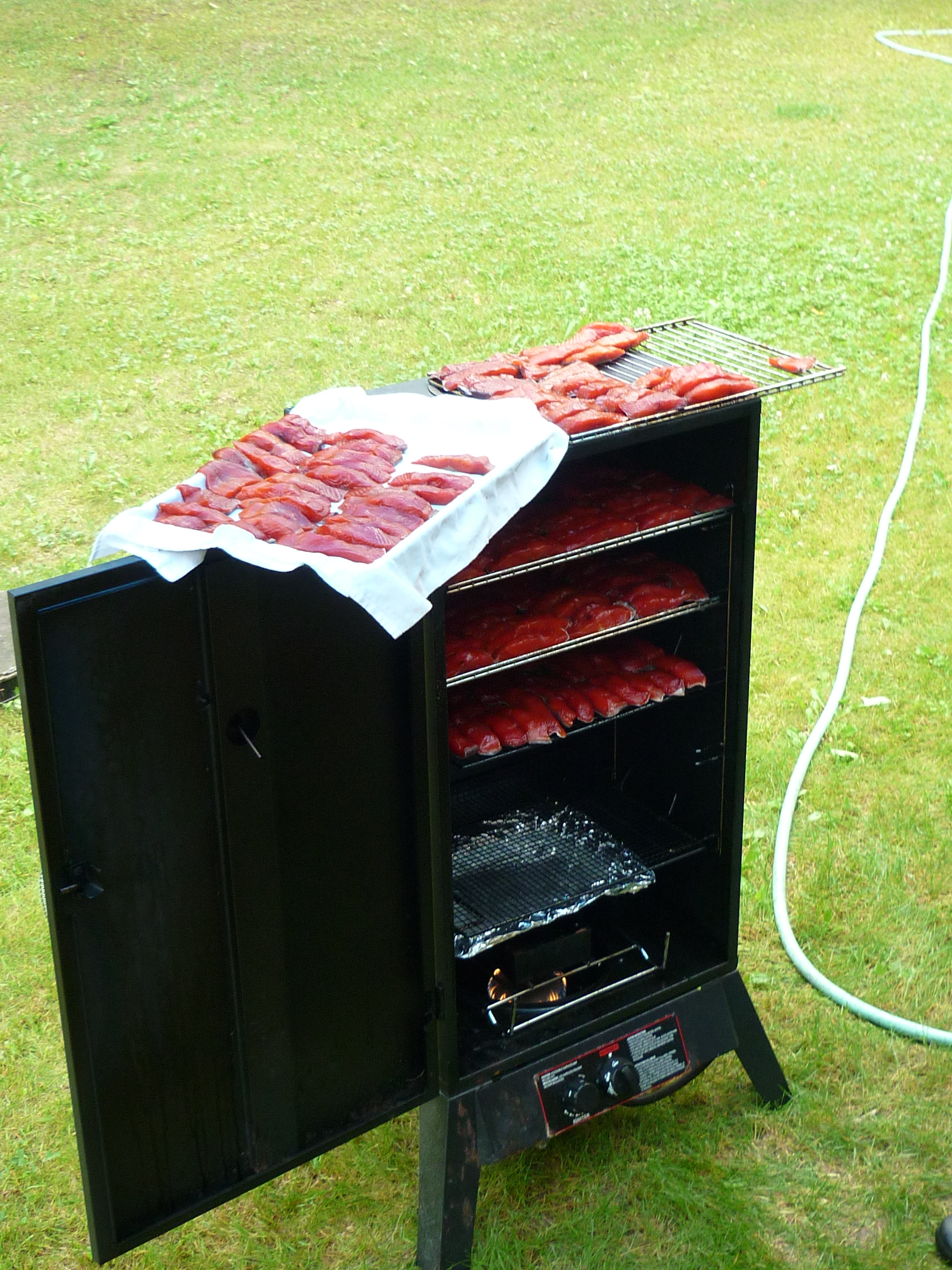
Put the fish onto racks in your smoker and smoke as manufacturer suggests. We like mesquite chips. This part takes us about 3 hours or so.

Our smoker runs hot and it’s easy to burn it, so keep a close eye.
The finished product. Now we will vacuum seal some and can some. We did about 15 sockeye salmon in this batch. There were a lot of small ones.
NOTE: 7/16/2022 Last summer I purchase a Traeger smoker. I smoked my fish on the “Smoke” setting for about 2 to 2.5 hours. Perfect. Oh, and I used 3 Bristol Bay sockeye filets (they average around 8# compared to Kenai/Kasilof/Copper) and about 10 bellies — that filled my Traeger. The brown sugar was 3 cups and the salt was 1/2 cup.

Canning instructions to myself: use the pressure canner. Add water to the level marked over many, many years in the canner. Bring the water to a boil. Load pint jars with smoked salmon chunks and put them into the canner while you’re waiting for the full boil. Once boiling and pints are in, set the lid, but keep the stopcock open. Let the canner boil. Once steam exhausts from the stopcock in a steady stream for ten minutes, shut the stopcock. Let the pressure build to 10. Adjust the stovetop flame to keep a steady 10 pressure for 110 minutes (1 hour and fifty minutes). Remove from heat. Let it cool down for at least an hour before opening the stopcock to release the pressure. Then another hour or so before opening the lid and removing the jars. Wild fluctuations in pressure or overfilled jars will result in the jars exhausting liquid into the canning water. It doesn’t hurt anything, it’s just messy.
Use canned smoked salmon to make dip for crackers by combining 8oz. cream cheese with one pint of flaked canned smoked salmon. You may have to heat the smoked salmon first in order to get it to flake, and then maybe heat the cream cheese to get it to stir properly. I use the microwave for both tasks. This is simply the BEST smoked salmon dip known to creation. Seriously. I kid you not. –Paula
This is a recipe based upon one given to me by my friend Bella. I like it because the orange and the dried cranberries really cut the tartness of the lingons. Today I put the sauce into three half-pint jars and a small bowl. I would guess if you wanted to put all of it into jars, you’d get about eight half-pints.
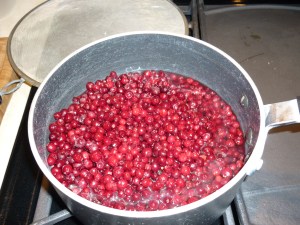
In a large pan, cook 6 cups fresh or frozen lingonberries with 2 cups of water until the lingons are tender. I started in a pan that was too small and had to pour into a larger one to finish. Just sayin’.
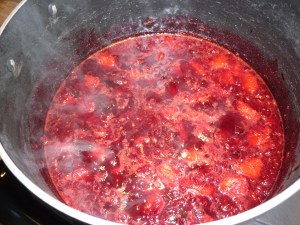
Add the grated rind and chopped pulp of 3 medium oranges along with 1 cup dried cranberries (Craisins). Cook for 10 minutes.
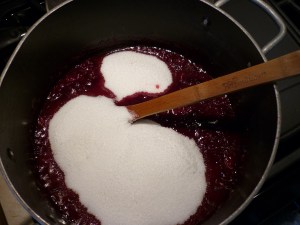
Add 4-1/2 cups sugar and simmer, stirring frequently, until thick (about 30 minutes).
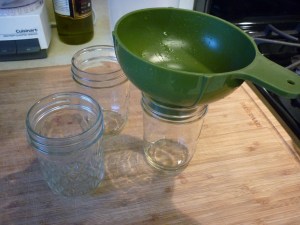
Pour into sterile jars and seal with hot lids. Like jam, this has enough sugar to preserve it.
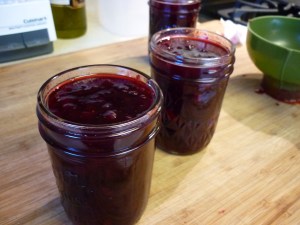
Tip the jars upside down for about thirty minutes until the lids do not pop back up when pressed.
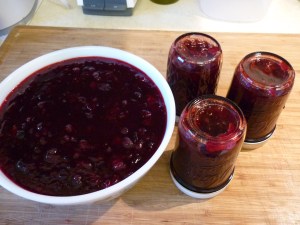
Here ’tis. Very tasty and ready to serve with our Christmas turkey or Swedish meatballs or sandwiches or ham or . . . whatever!
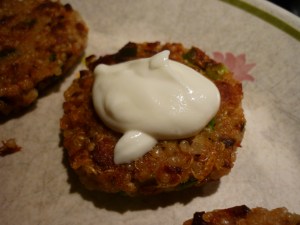
This is an appetizer based upon a recipe found at EatingWell. It’s the first time I’ve made it. I make smoked salmon every year and then can some of it. Our favorite way to eat these pint jars of smoked salmon is to mix one jar with a half-pound of warmed cream cheese and serve it with crackers. Leftovers? Never. It’s delish.
When a recipe calls for smoked salmon it’s hard to know what they mean. Usually, I think they mean a style of smoked salmon like lox. Our smoked salmon is more what you would call kippered. It’s very sweet and dry. For this recipe where it calls for 8-oz smoked salmon, I opened a pint jar of my smoked salmon. I flaked it with my fingers to make it very fine so it would mix well with the other ingredients. Making the little patties was quite difficult because I just wanted to get a spoon and start eating the mixture. It smelled SO good! The cakes turned out delicious, but I think the sauce leaves a little to be desired. A cream cheese sauce with a little dill might be just the ticket.
Quinoa Cakes with Smoked Salmon Recipe
Prepare the quinoa by bringing 1-1/4 cup water and ¾ cup quinoa to a boil in a medium saucepan. Reduce heat to maintain a simmer, cover and cook until the water is absorbed, 10 to 15 minutes. Transfer the quinoa to a large bowl and spread out to cool, about 15 minutes. I set my pan outside, it’s -10 degrees F today, so it didn’t take that long to cool. Ha!

To prepare the sauce combine 1 cup reduced-fat sour cream with 1-1/2 tsp. finely grated lemon zest and ½ tsp. freshly squeezed lemon juice.
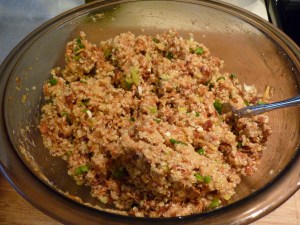
To prepare the cakes: Mix together 8-oz. salmon, 2 large eggs plus 1 egg white, 1/2 cup breadcrumbs, 1/2 cup finely chopped scallions (green onions), 1 tsp. dried dill weed, 1 tsp. lemon zest and pepper (to taste) with the quinoa. The wonderful smell will drive you crazy at this time.

Using your hands, thoroughly combine and squeeze the mixture to bring it together. Using 2 rounded tablespoons of the mixture for each and keeping your hands damp (wet hands is important to keep mixture from sticking to them!), form 32 small cakes, about ¾ inch thick and 2 inches wide, pressing firmly to help them hold together. Place the cakes on a large baking sheet and/or a large plate. I ended up with 24 cakes, so a little too large, but still yummy.

Cover with plastic wrap and refrigerate for at least 30 minutes (or up to 6 hours).
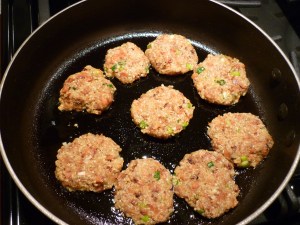
Use a couple tablespoons of olive oil to coat your skillet and fry the cakes in three batches until golden brown.

Serve warm or at room temperature, garnished with sauce.

I debated posting this as I don’t think most people are really interested, but then Reno asked me for the recipe today and I thought it would be easier and make a nice permanent record. So . . . here goes with Salmon Pickles. This is a salty pickle, not a sweet pickle. The fish is not cooked, but instead it is preserved with salt and vinegar.
Sanitize quart jars. Making these pickles is a two-step process and I start with quart jars, then finish in a few days with pint jars.
Mix together in a pitcher, or other pouring vessel, 1/3 cup pickling salt and 1 quart cold water. Add 1 quart vinegar . The ratio is one part salt brine to one part vinegar. The vinegar can be any kind as long as it is at least 4 percent (40 grains). I have made this using white vinegar, cider vinegar, and rice vinegar. My favorite is cider vinegar. If you make too much brine-vinegar solution, save it, you’ll need it in four days.
Remove skin from red (sockeye) or silver (coho) salmon, don’t worry about medium and small bones because they soften and are quite edible. Cut salmon into strips, about 1”x4”. You will cut the fish into bite-size tidbits during the second step of the process in a few days.
Place salmon strips loosely into quart jars. Pour the brine-vinegar solution to the top. The salmon strips need to be coated on all sides with brine-vinegar so don’t pack them in. Put lids on the jars and refrigerate for four days. I tip the jars occasionally, even placing them upside down for awhile.

For the second step of the process, sanitize pint jars. Prepare leftover brine-vinegar or a new batch. Drain quart jars, saving the salmon strips, but discarding the used brine-vinegar solution. The salmon is now a pink color and feels firm.
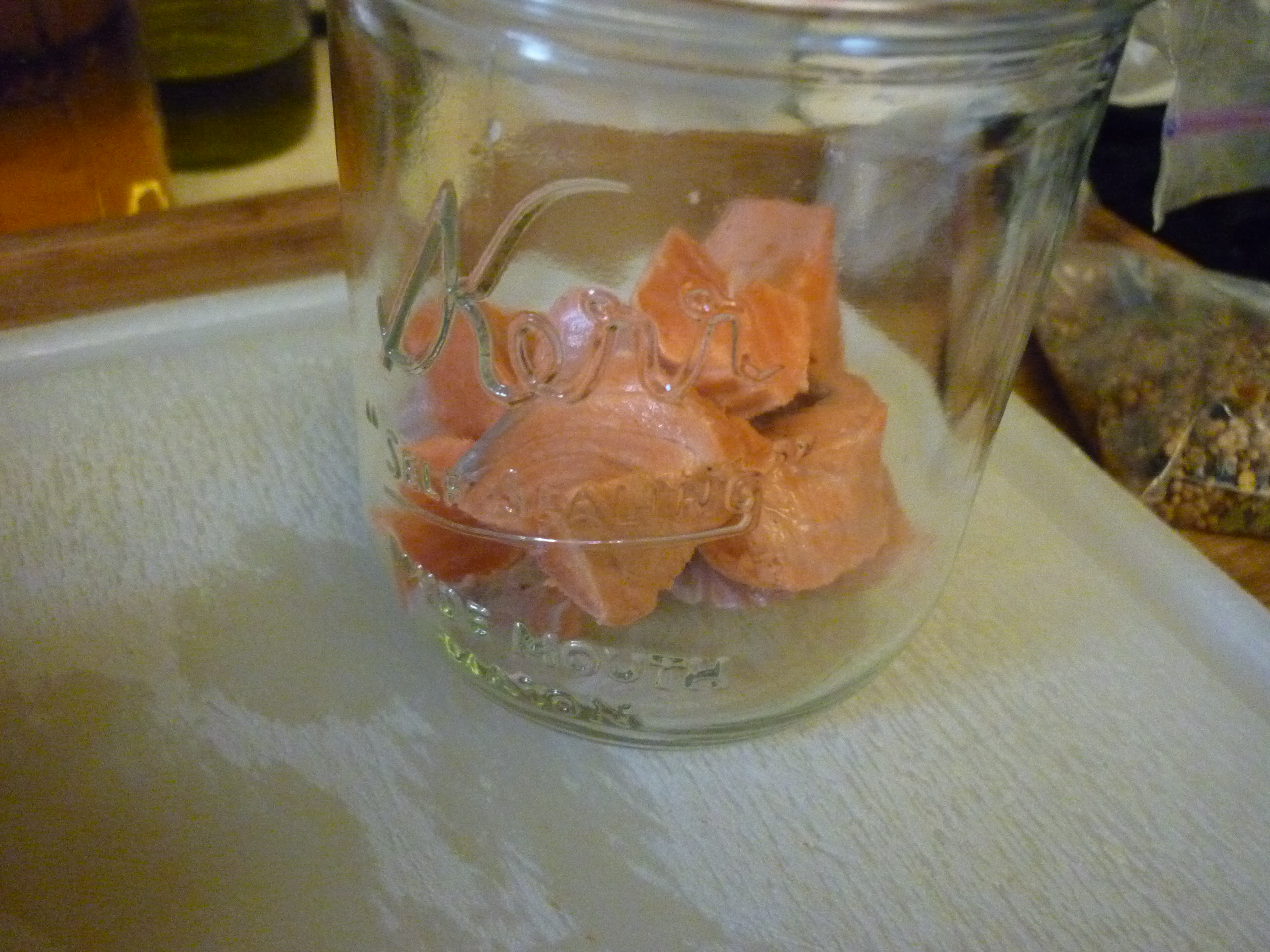
Cut the salmon into tidbits. Slice onions. Slice oranges (or lemons). Have pickling spice handy.
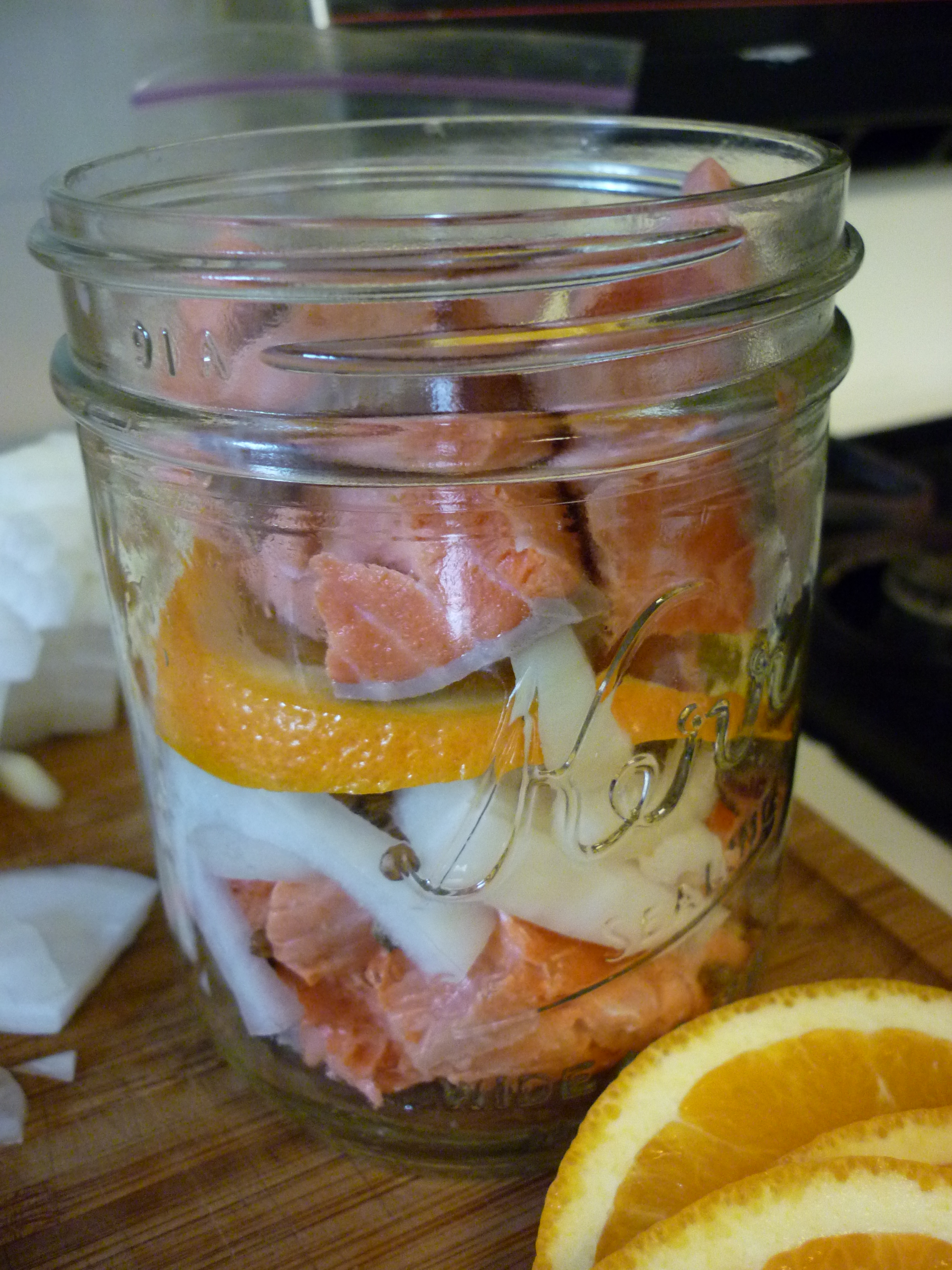
In pint jars layer salmon tidbits, sliced onion, sliced orange, and pickling spice.
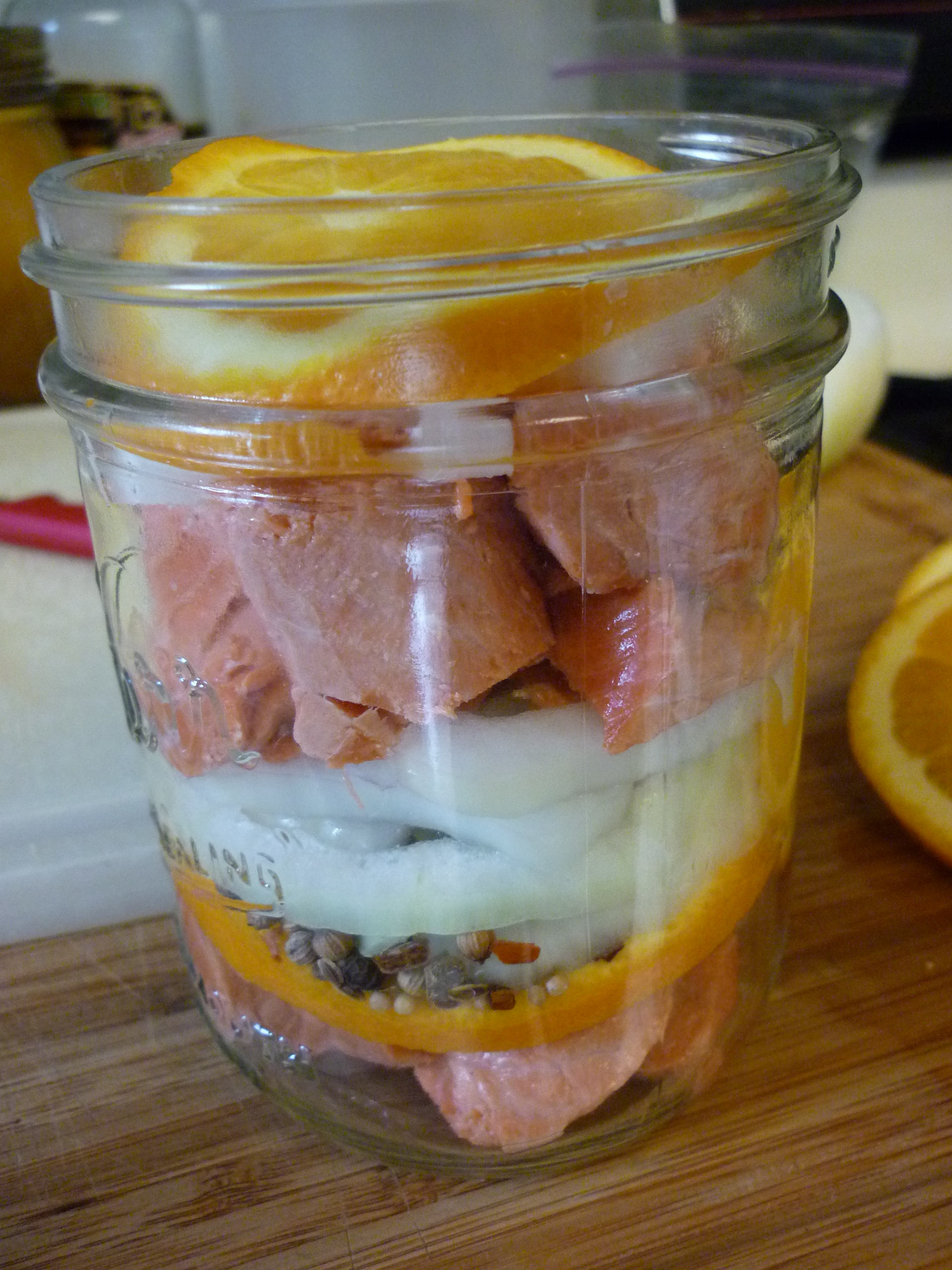

Pour brine-vinegar solution to the top, make sure to release bubbles so that everything is thoroughly coated. Put lids on jars and refrigerate for four days. Serve!


Keep refrigerated. Keeps for six weeks under refrigeration.
Side note: Better salmon pickles are made by withdrawing a filet from a salt barrel (salmon filets that have been layered with pickling salt for months . . . or dare I say, years?), let it soak in cold water that is refreshed occasionally for 24 hours. Cut into tidbits and layer with onion, pickling spice, and orange in pint jars. Pour in vinegar that has been cut to about 85 percent vinegar to 15 percent water. Let sit in refrigerator for a few days and then serve. But who has a salt barrel these days? Anyway, that is the way I was taught to make salmon pickles back in the dark ages.
 Foods Passion