P1030761

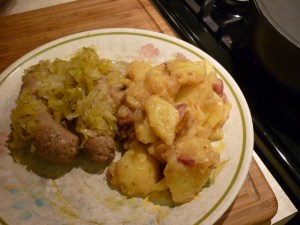
Another favorite, this is based upon the recipe in Betty Crocker’s Cookbook (1969). It goes really great with bratwurst. The dinner you see pictured here includes bratwurst and sauerkraut, but neither of those are in this potato salad recipe. Just sayin’.

I peel and then boil the potatoes, but as long as they’re cooked it shouldn’t matter how it’s accomplished.  The potatoes work best if they’re cooled.3 pounds cooked potatoes, peeled

3 pounds cooked potatoes, peeled
I peel and then boil the potatoes, but as long as they’re cooked it shouldn’t matter how it’s accomplished. The potatoes work best if they’re then cooled.

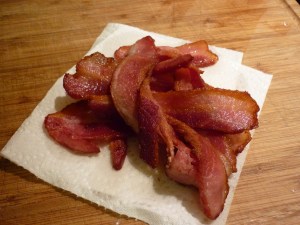
In a large skillet, fry 6 slices of bacon until crisp.

In a large skillet, fry 6 slices of bacon until crisp.

Remove bacon and place on absorbent towel to drain.

Remove bacon and place on absorbent towel to drain.

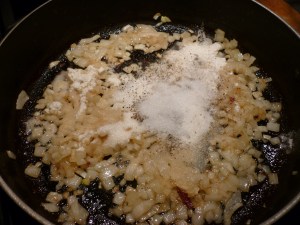
Cook and stir 3/4 cup chopped onion in bacon drippings until tender and golden brown.

Cook and stir 3/4 cup chopped onion in bacon drippings until tender and golden brown.

Stir in 2 Tbsp. flour, 2 Tbsp. sugar, 1 tsp. salt, 1/2 tsp. celery seed, and dash of pepper. Cook over low heat, stirring until bubbly.

Stir in 2 Tbsp. flour, 2 Tbsp. sugar, 1 tsp. salt, 1/2 tsp. celery seed, and dash of pepper. Cook over low heat, stirring until bubbly.

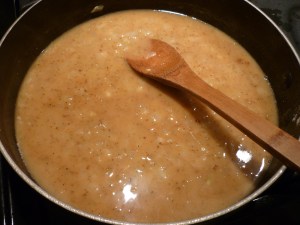
Remove from heat; stir in 3/4 cup water and 1/3 cup vinegar (I use cider vinegar). Heat to boiling; stirring constantly. Boil and stir 1 minute.

Remove from heat; stir in 3/4 cup water and 1/3 cup vinegar (I use cider vinegar). Heat to boiling; stirring constantly. Boil and stir 1 minute.

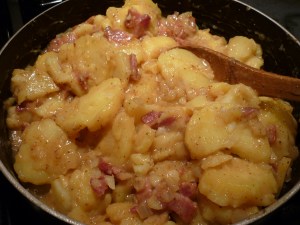
Chop bacon, thinly slice potatoes. Carefully stir into hot mixture. Heat through, stirring lightly to coat potato slices.

Chop bacon, thinly slice potatoes. Carefully stir into hot mixture. Heat through, stirring lightly to coat potato slices.

Serves 5 or 6. And tastes pretty great the next day, too!

Serves 5 or 6. And tastes pretty great the next day, too!

Hot German Potato Salad ingredients

3 pounds cooked potatoes, peeled

6 slices bacon

¾ cup chopped onion

2 Tbsp. flour

2 Tbsp. sugar

1 tsp. salt

½ tsp. celery seed

Dash pepper

¾ cup water

1/3 cup vinegar

P1030741

This is a recipe based upon one given to me by my friend Bella. I like it because the orange and the dried cranberries really cut the tartness of the lingons. Today I put the sauce into three half-pint jars and a small bowl. I would guess if you wanted to put all of it into jars, you’d get about eight half-pints.

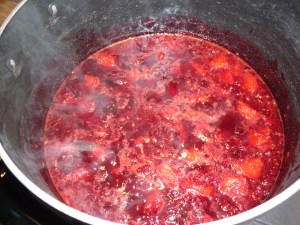
. In a large pan, cook 6 cups fresh or frozen lingonberries with 2 cups of water until the lingons are tender.

In a large pan, cook 6 cups fresh or frozen lingonberries with 2 cups of water until the lingons are tender. I started in a pan that was too small and had to pour into a larger one to finish. Just sayin’.

. Add the rind and pulp of 3 medium oranges and 1 cup dried cranberries (Craisins). Cook for 10 minutes.

Add the grated rind and chopped pulp of 3 medium oranges along with 1 cup dried cranberries (Craisins). Cook for 10 minutes.

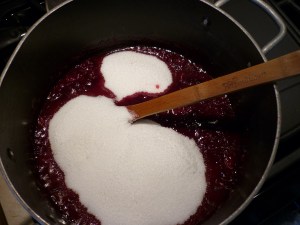
Add 4-1/2 cups sugar and simmer, stirring frequently, until thick (about 30 minutes).

Add 4-1/2 cups sugar and simmer, stirring frequently, until thick (about 30 minutes).

Pour into sterile jars and seal with hot lids. Like jam, this has enough sugar to preserve it. Tip the jars upside down for about thirty minutes until the lids do not pop back up when pressed upon.

Pour into sterile jars and seal with hot lids. Like jam, this has enough sugar to preserve it.

 Tip the jars upside down for about thirty minutes until the lids do not pop back up when pressed upon.

Tip the jars upside down for about thirty minutes until the lids do not pop back up when pressed.

Here 'tis. Very tasty and ready to serve with our Christmas turkey or with sandwiches or meatloaf or . . . whatever!

Here ’tis. Very tasty and ready to serve with our Christmas turkey or Swedish meatballs or sandwiches or ham or . . . whatever!

P1030681

This is an appetizer based upon a recipe found at EatingWell. It’s the first time I’ve made it. I make smoked salmon every year and then can some of it. Our favorite way to eat these pint jars of smoked salmon is to mix one jar with a half-pound of warmed cream cheese and serve it with crackers. Leftovers? Never. It’s delish.

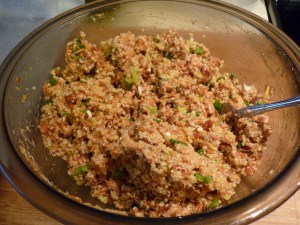
When a recipe calls for smoked salmon it’s hard to know what they mean. Usually, I think they mean a style of smoked salmon like lox. Our smoked salmon is more what you would call kippered. It’s very sweet and dry. For this recipe where it calls for 8-oz smoked salmon, I opened a pint jar of my smoked salmon. I flaked it with my fingers to make it very fine so it would mix well with the other ingredients. Making the little patties was quite difficult because I just wanted to get a spoon and start eating the mixture. It smelled SO good! The cakes turned out delicious, but I think the sauce leaves a little to be desired. A cream cheese sauce with a little dill might be just the ticket.

Quinoa Cakes with Smoked Salmon Recipe

Prepare the quinoa by bringing 1-1/4 cup water and ¾ cup quinoa to a boil in a medium saucepan. Reduce heat to maintain a simmer, cover and cook until the water is absorbed, 10 to 15 minutes. Transfer the quinoa to a large bowl and spread out to cool, about 15 minutes. I set my pan outside, it’s -10 degrees F today, so it didn’t take that long to cool. Ha!

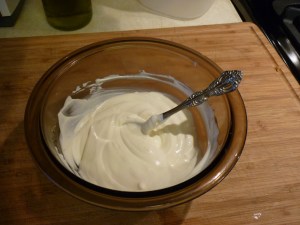
To prepare the sauce combine 1 cup reduced-fat sour cream with 1-1/2 tsp. finely grated lemon zest and ½ tsp. freshly squeezed lemon juice.

To prepare the sauce combine 1 cup reduced-fat sour cream with 1-1/2 tsp. finely grated lemon zest and ½ tsp. freshly squeezed lemon juice.

To prepare the quinoa cakes: Add salmon, eggs, breadcrumbs, scallions, chopped dill, lemon zest and pepper to the quinoa.

To prepare the cakes: Mix together 8-oz. salmon, 2 large eggs plus 1 egg white, 1/2 cup breadcrumbs, 1/2 cup finely chopped scallions (green onions), 1 tsp. dried dill weed, 1 tsp. lemon zest and pepper (to taste) with the quinoa. The wonderful smell will drive you crazy at this time.

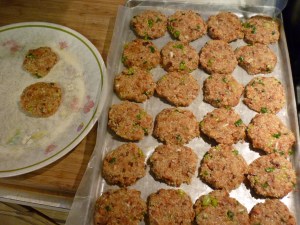
Using your hands, thoroughly combine and squeeze the mixture to bring it together. Using 2 rounded tablespoons of the mixture for each and keeping your hands damp, form 32 small cakes, about ¾ inch thick and 2 inches wide, pressing firmly to help them hold together. Place the cakes on a large baking sheet and/or a large plate. Cover with plastic wrap and refrigerate for at least 30 minutes (or up to 6 hours).

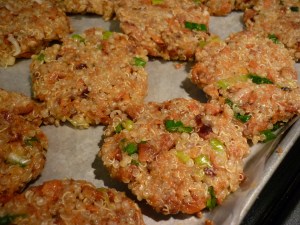
Using your hands, thoroughly combine and squeeze the mixture to bring it together. Using 2 rounded tablespoons of the mixture for each and keeping your hands damp (wet hands is important to keep mixture from sticking to them!), form 32 small cakes, about ¾ inch thick and 2 inches wide, pressing firmly to help them hold together. Place the cakes on a large baking sheet and/or a large plate. I ended up with 24 cakes, so a little too large, but still yummy.

Cover with plastic wrap and refrigerate for at least 30 minutes (or up to 6 hours).

Cover with plastic wrap and refrigerate for at least 30 minutes (or up to 6 hours).

Use a couple tablespoons of olive oil to coat your skillet and fry the cakes in three batches until golden brown.

Use a couple tablespoons of olive oil to coat your skillet and fry the cakes in three batches until golden brown.

Serve warm or at room temperature, garnished with sauce.

Serve warm or at room temperature, garnished with sauce.

P1030681

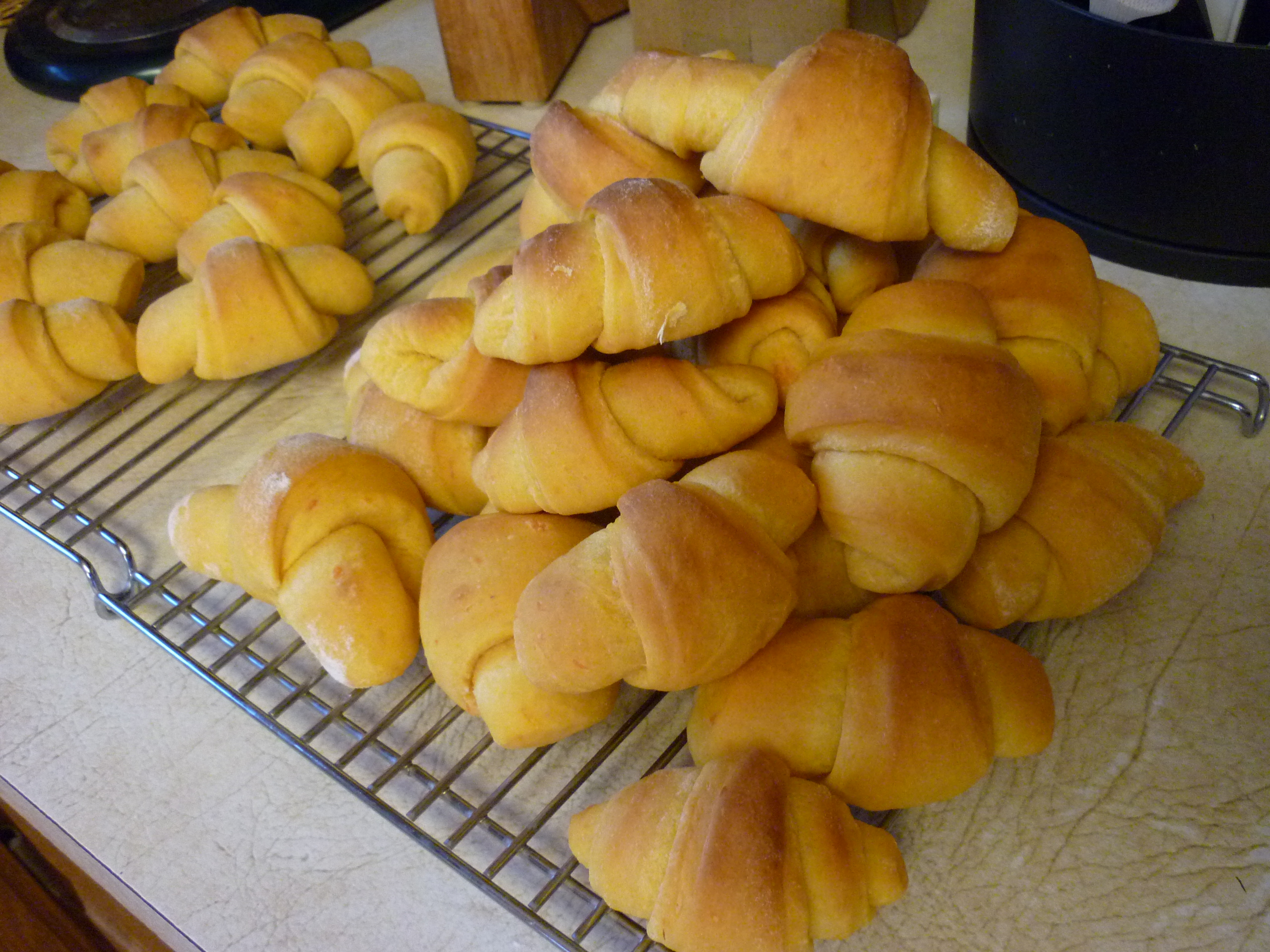
These are the fluffiest, most delicious dinner rolls. The recipe is based upon one found in Taste of Home’s Oct/Nov 2000 issue. The original recipe calls for using a 15-oz. can of cut sweet potatoes, drained and mashed. I use a fresh sweet potato, cook it, and then let it cool a bit before adding to the recipe. I just eyeball the sweet potato to decide what would fit into a can.

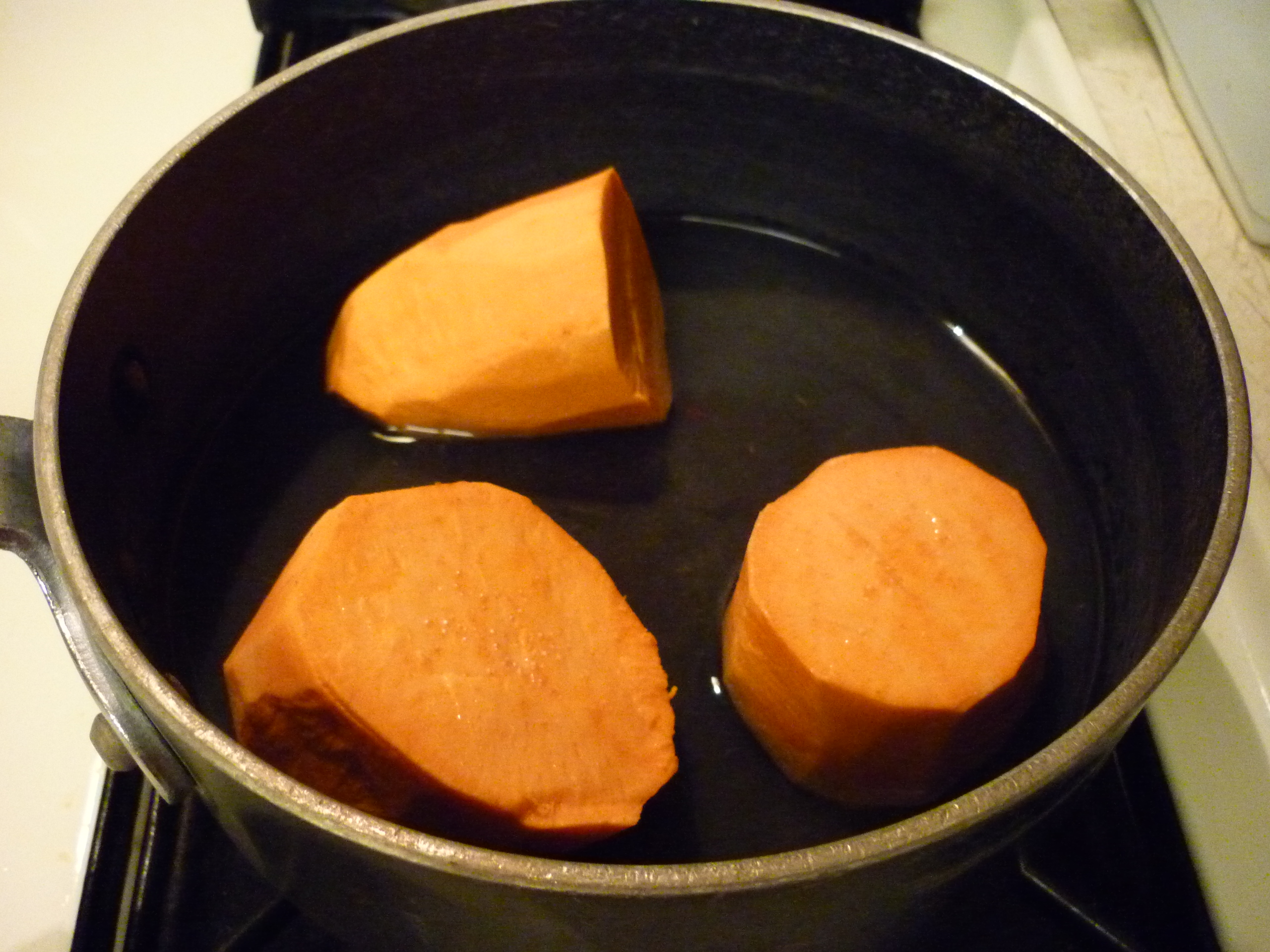
Cook a sweet potato (steam, boil, bake, whatever) and let cool a little bit.

2 packages yeast

1 cup warm water

1/2 cup sugar

1/2 cup shortening

1 egg

1-1/2 tsp. salt

5 to 5-1/2 cups flour

Dissolve yeast, let stand 5 minutes. Beat in sweet potatoes, sugar, shortening, egg, salt, and 3 cups flour. Add enough flour to make stiff dough. Knead. Place in greased bowl. Let rise until double. Punch down.

Divide into thirds.

Onto a floured board, roll each out into 12” circle.

Melt 3 Tbsp. butter and brush each round of dough with  butter.

Cut each circle into 12 wedges. I use a sharp knife or a pizza cutter.

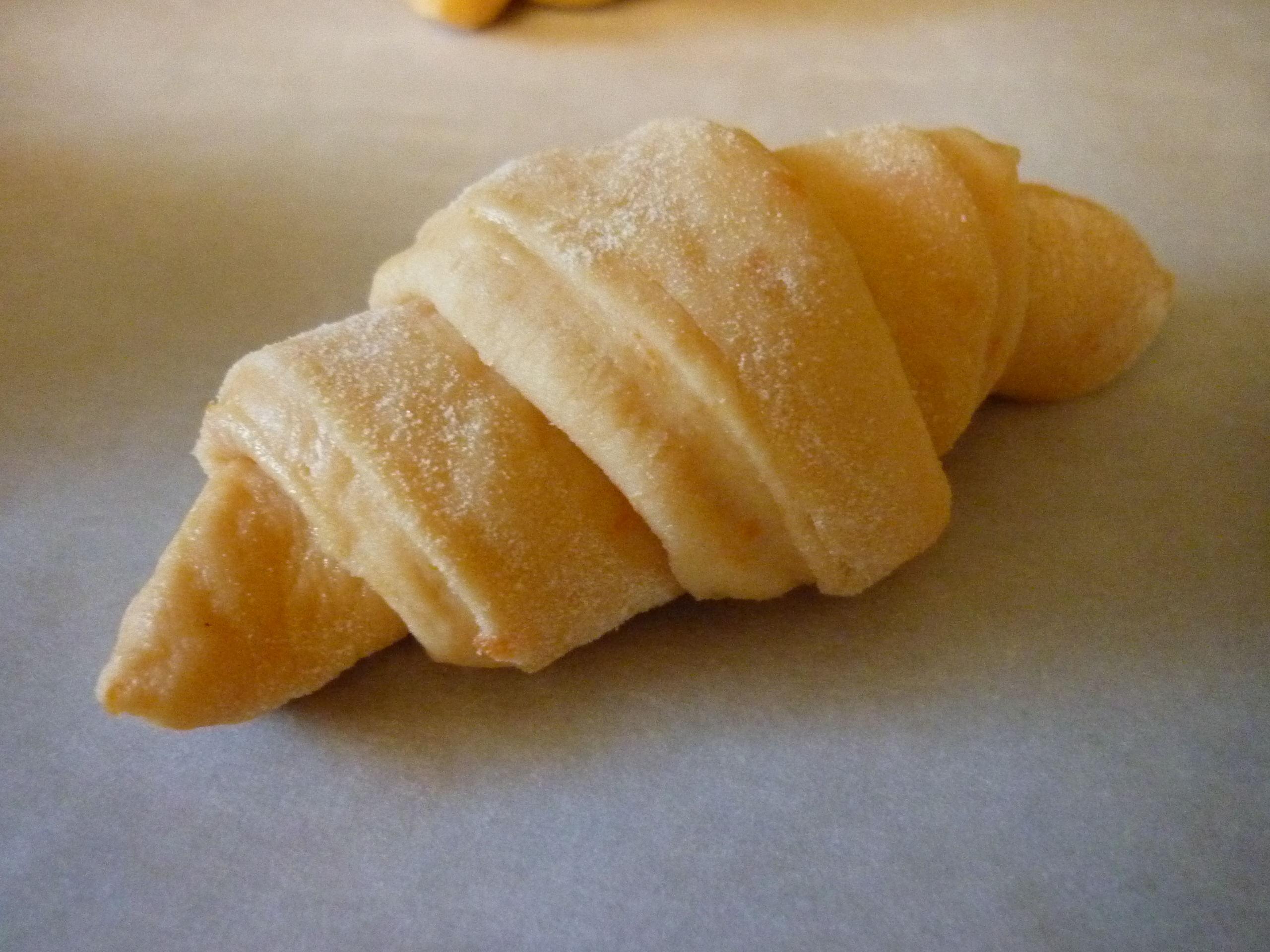
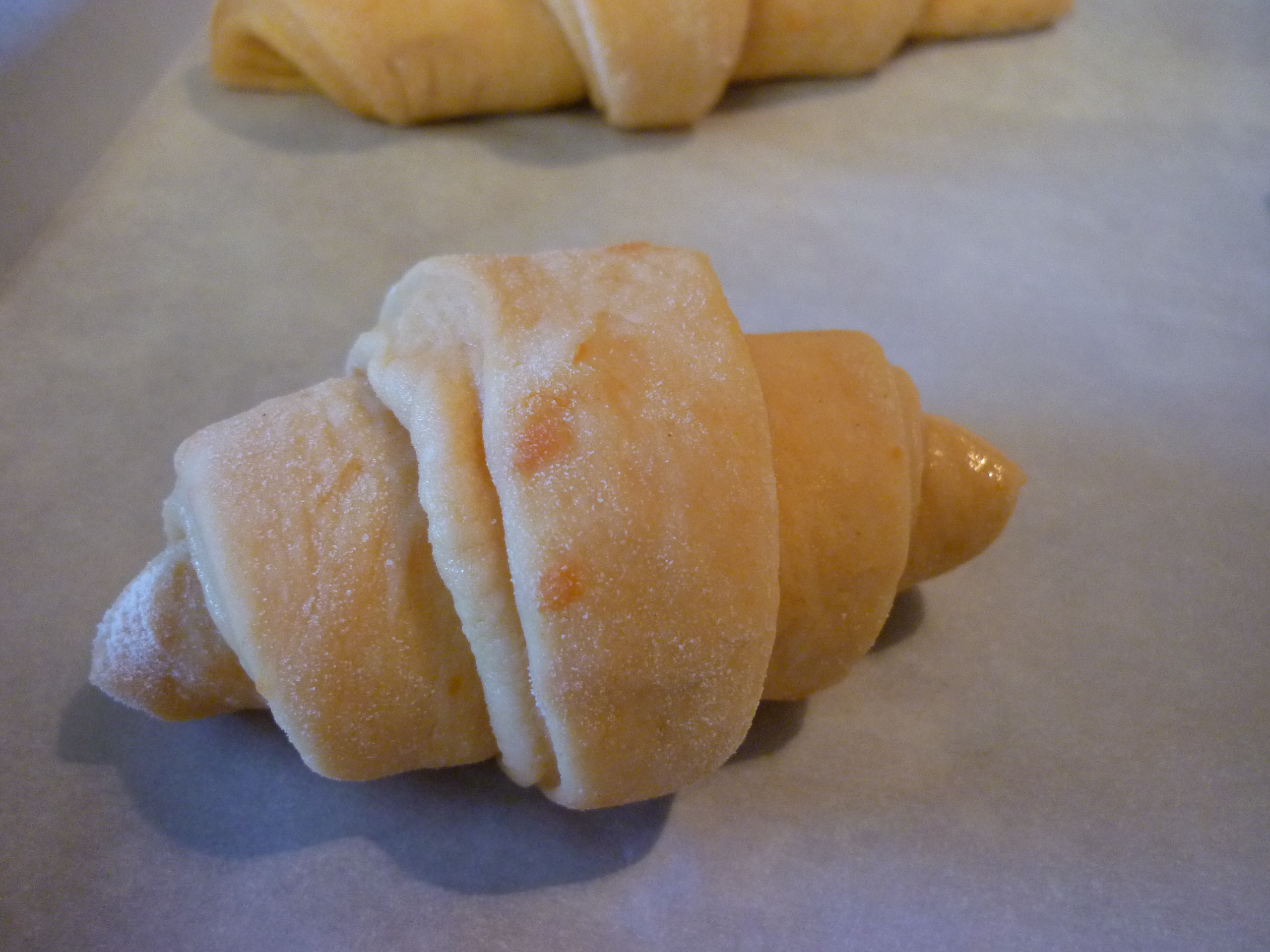
Roll up from wide end and place, pointed end down, 2” apart on greased baking sheets (or parchment covered, as seen here).

Cover and let rise until double.

Bake at 375° for 13-15 minutes or until golden.

Makes 36 rolls.


This is a recipe my friend Kathryn gave me because she knows how much I like dishes with sauerkraut. As ever, it’s not fussy to make. I like to serve it with spaetzle, but it tastes good without accompaniment. I made this stew the same day that I baked Pumpernickel Bread, so that’s what I served it with.

Heat oil over medium heat. Add onions; cook 10 minutes. Stir in garlic; cook 5 minutes more or until onions are very tender.

Stir in garlic; cook 5 minutes more or until onions are very tender. Stir in paprika; cook 1 minute.


Add pork, sauerkraut, tomatoes with their juice, broth, salt and pepper; heat to boiling over high heat. Cover and bake in preheated 325 degree oven for one and a half hours or until meat is fork-tender.

Remove from oven; stir in sour cream. Serve over noodles or spaetzle.


Hungarian Pork Goulash

2 Tbsp. vegetable oil

2 large onions, chopped

1 garlic clove, minced

¼ cup paprika (yes, this much!)

2 lb. boneless pork roast, cut into 1-1/2” chunks

16 oz sauerkraut, rinsed and drained

1 14-1/2 oz. can diced tomatoes

1-3/4 cups beef broth

½ tsp. salt

¼ tsp. ground black pepper

8 oz. sour cream

Heat oil over medium heat. Add onions; cook 10 minutes. Stir in garlic; cook 5 minutes more or until onions are very tender.

Stir in paprika; cook 1 minute. Add pork, sauerkraut, tomatoes with their juice, broth, salt and pepper; heat to boiling over high heat. Cover and bake in preheated 325 degree oven for one and a half hours or until meat is fork-tender.

Remove from oven; stir in sour cream. Serve over noodles or spaetzle.

Serves 6


Steve Cowper was the Governor of Alaska from 1986 to 1990. Sometime during his tenure the chef working at the Governor’s Mansion was interviewed about foods the governor liked. She gave this buttermilk pie recipe as being a favorite.

Buttermilk Pie

½ cup butter

2 cups sugar

3 rounded tablespoons flour

3 eggs, beaten

1 cup buttermilk

1 tsp. vanilla

Dash nutmeg

1 9” unbaked pie crust

Let butter soften. Add sugar to butter and cream together well. Add flour and eggs. Beat well. Stir in buttermilk, vanilla, and nutmeg. Pour into unbaked pie crust. Bake 45-50 minutes on lowest oven rack at 350 degrees. Cool completely before serving.

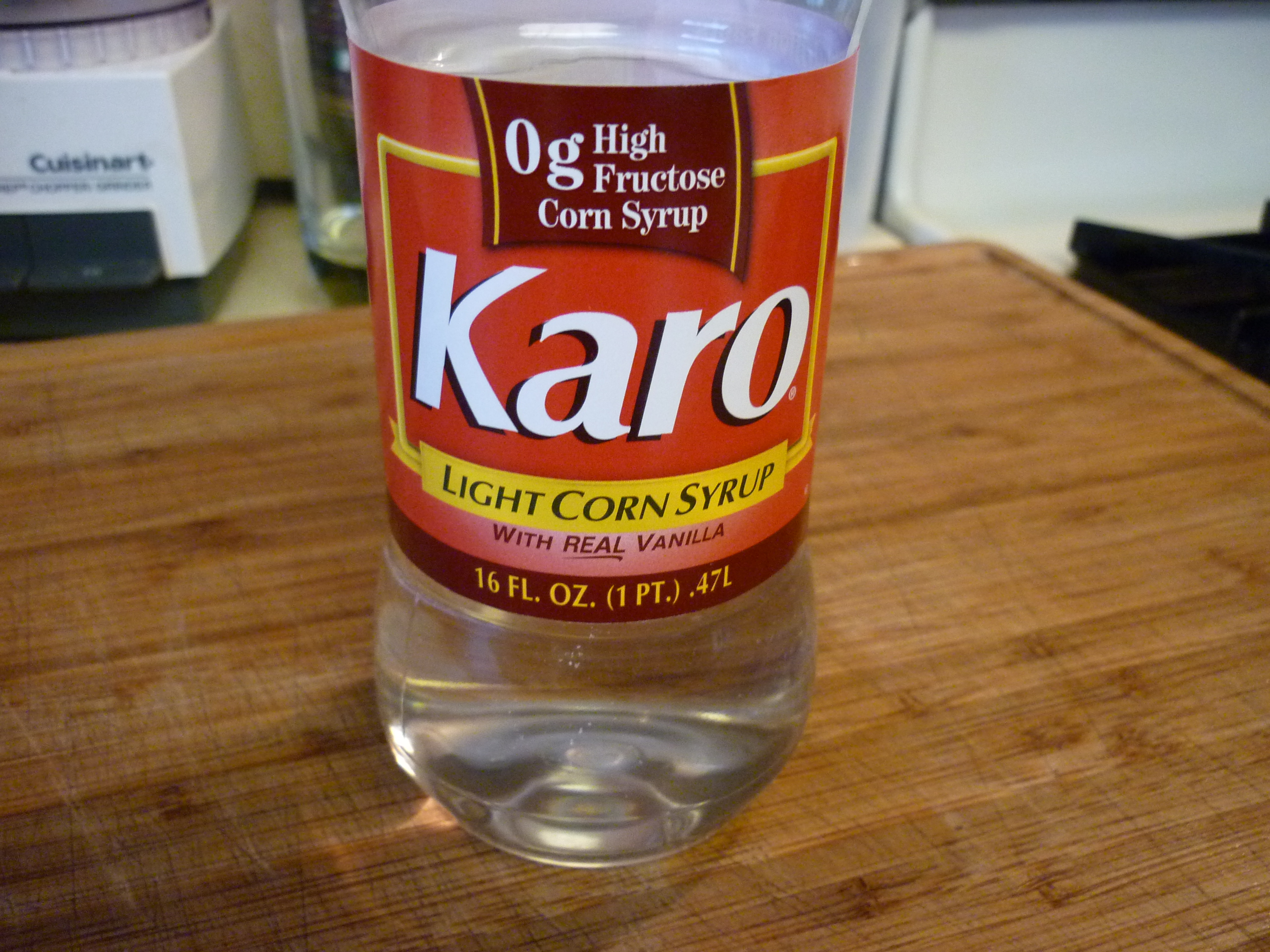
Our church’s annual Soup and Pie Supper is great fun. This year I baked a pecan pie and a buttermilk pie. First, I’ll give you the pecan pie recipe. I use the one given on the Karo bottle.

There are a couple things to note about this recipe. Karo Light Corn Syrup is called light because it is the opposite of dark, not because it is low in calories. Let’s be clear. Dark corn syrup looks like molasses and I’ve made pecan pie before using molasses, but it was not well received. I like to bake a pecan pie using pecan halves, not chopped pecans. It makes a prettier presentation. Cutting the pie is more difficult through such big pieces, though, so make your own decision.

Pecan Pie

1 cup Karo Light Corn Syrup

3 eggs

1 cup sugar

2 Tbsp. butter, melted

1 tsp. vanilla extract

1-1/2 cups pecans

1 unbaked 9” pie crust

Stir first 5 ingredients thoroughly using a spoon. Mix in pecans.

Pour into pie crust.

Bake on lowest rack of oven 50-60 minutes at 350 degrees. Cool 2 hours. Store in refrigerator.

Here it is, in the oven beside the buttermilk pie.

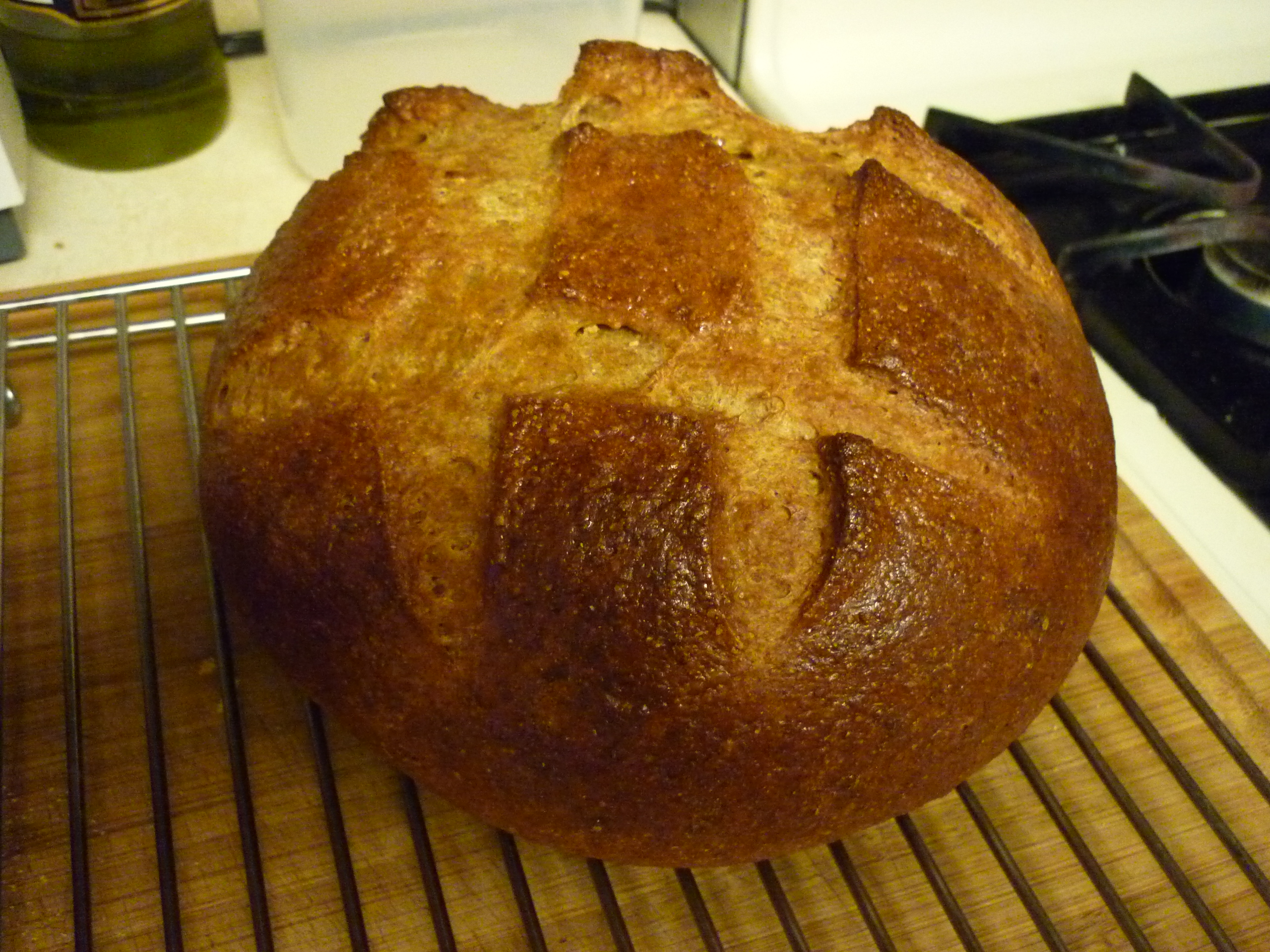
This recipe is from Sunset Breads, Step by Step Techniques (Lane Publishing, 1984). It is my bread making Bible. Most of my favorite bread recipes are found here. I’ve made this Molasses Pumpernickel Bread many times throughout the years. One lasting memory is when I pulled these loaves from the oven and then a couple friends stopped by. They started picking at one of the loaves and by the time they left, nearly a whole loaf was gone! I like to serve this bread with soup or German-style foods.

Molasses Pumpernickel Bread

2 Tbsp. butter

2 cups milk

1-1/2 tsp. salt

1/2 cup molasses

1/2 cup warm water (about 110 degrees F)

2 pkgs (4-1/2 tsp) active dry yeast

1/3 cup firmly packed brown sugar

1-1/2 cups whole bran cereal (All-Bran)

3 cups rye flour

About 4-1/2 cups bread flour

1 egg yolk beaten with 1 Tbsp. water

Warm milk with butter until butter just melts. Stir in walk and molasses. Set aside.

In a large bowl (or mixing bowl with dough hook) combine water, yeast, and brown sugar. Stir until dissolved. Let stand until bubbly (about 15 minutes). Then add milk mixture, bran cereal, rye flour, and 2 cups bread flour. Beat until well-blended. Using mixer, let it go about 5-8 minutes medium speed. Stir in about 1-1/2 cups more bread flour. Continue kneading or mixing until smooth and satiny, adding flour to prevent sticking.

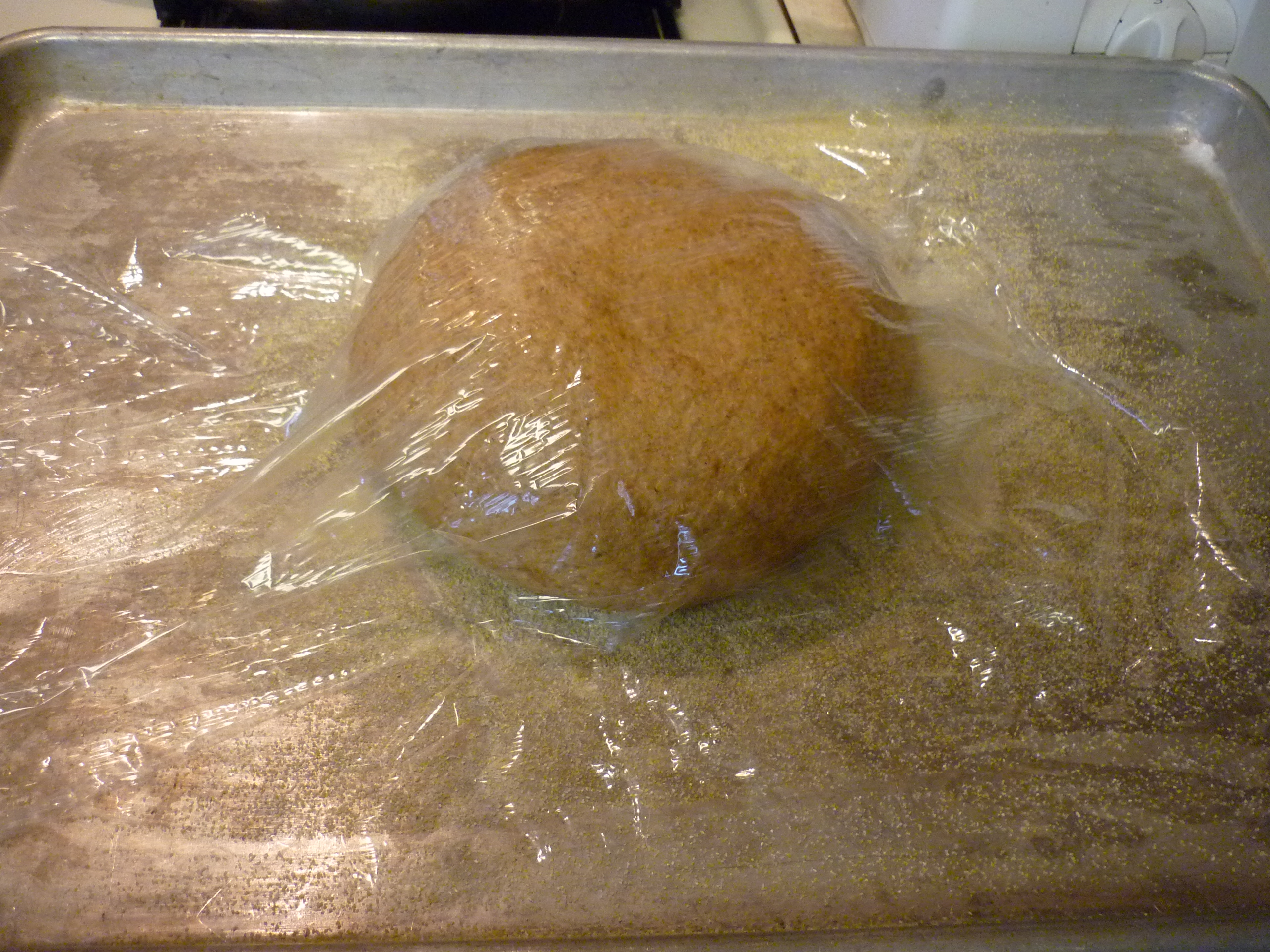
Place dough in a greased bowl; turn over to grease top. Cover with plastic wrap and let rise in a warm place until doubled (about 1-1/2 hours).

Punch dough down, divide into two equal portions, and knead each portion briefly to release air. Then shape each into a smooth ball; flatten slightly.

Place each loaf on a baking sheet at least 10 x 15″, which has been greased and sprinkled with corn meal to prevent sticking. Cover and let rise in a warm place until almost doubled (about 40 minutes).

With a razor blad or sharp floured knife, make 1/2″ deep slashed on tops of loaves, forming a ticktacktoe design. Brush tops and sides with egg yolk mixture.

Bake in preheated 350 degree oven for 30-35 minutes or until bread is richly browned and sounds hollow when tapped. Transfer to racks and let cool. Makes 2 round loaves.

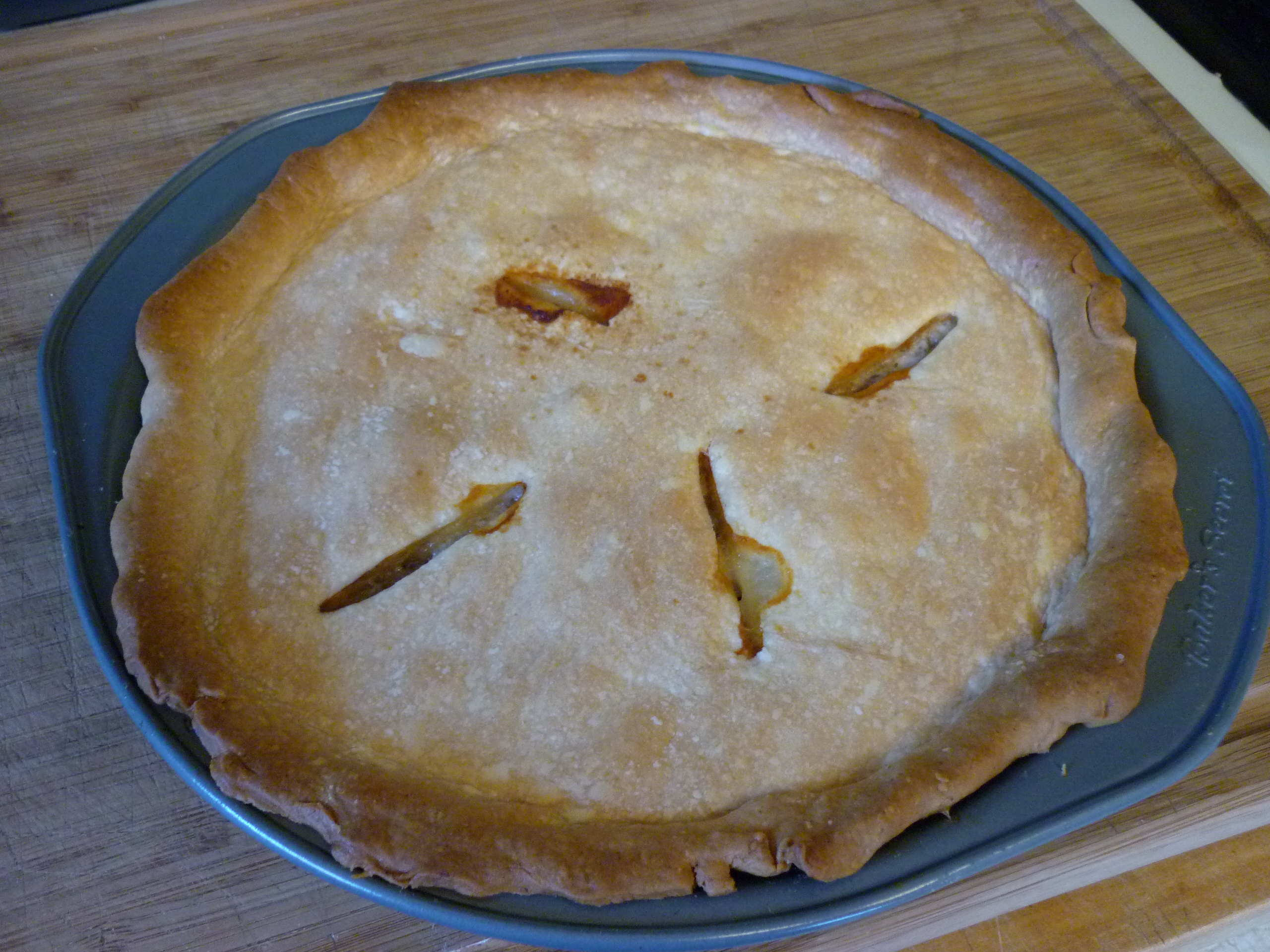
This is super simple and makes an excellent snack or dinner component when you want to have something already prepared and sitting in the refrigerator. The recipe is based upon one found in The Frugal Gourmet On Our Immigrant Ancestors (William Morrow 1990) by Jeff Smith. Smith says it is a Welsh dish. I’ve made this many times and I like the idea of eating it by hand on-the-go. Today I really didn’t pay much attention to measurements, just threw the ingredients in. I forgot to cover the dish for the first part of baking and it did come out a bit dry in the end. My ground pork was quite lean and I did not have but a tablespoon of accumulated fat to pour off.

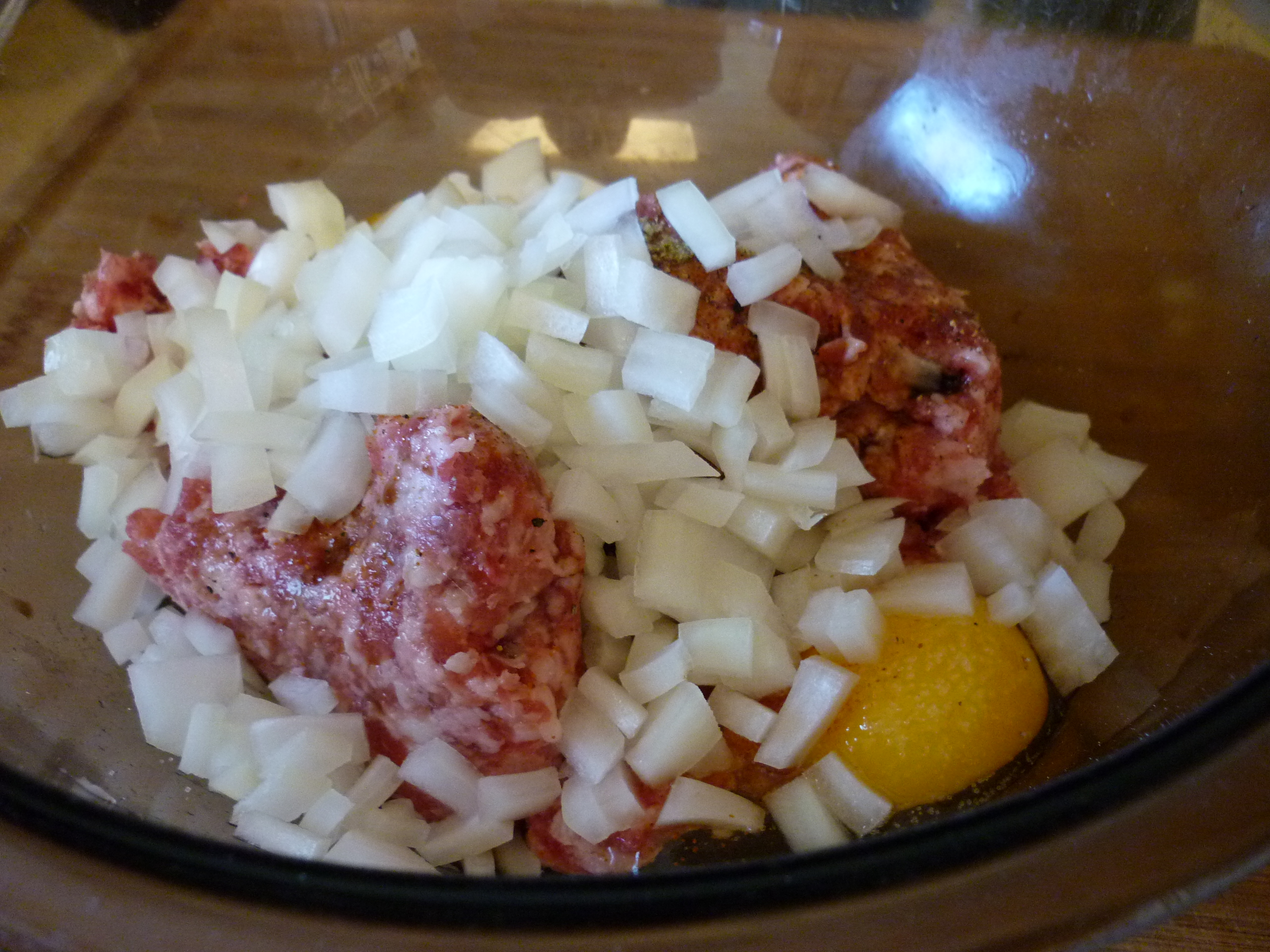
Mix together 1-1/2 pounds lean ground pork, 1 chopped onion, 2 eggs, ¼ tsp. cayenne, ¼ tsp. sage, 2 Tbsp. Worchestershire sauce, Salt and pepper.

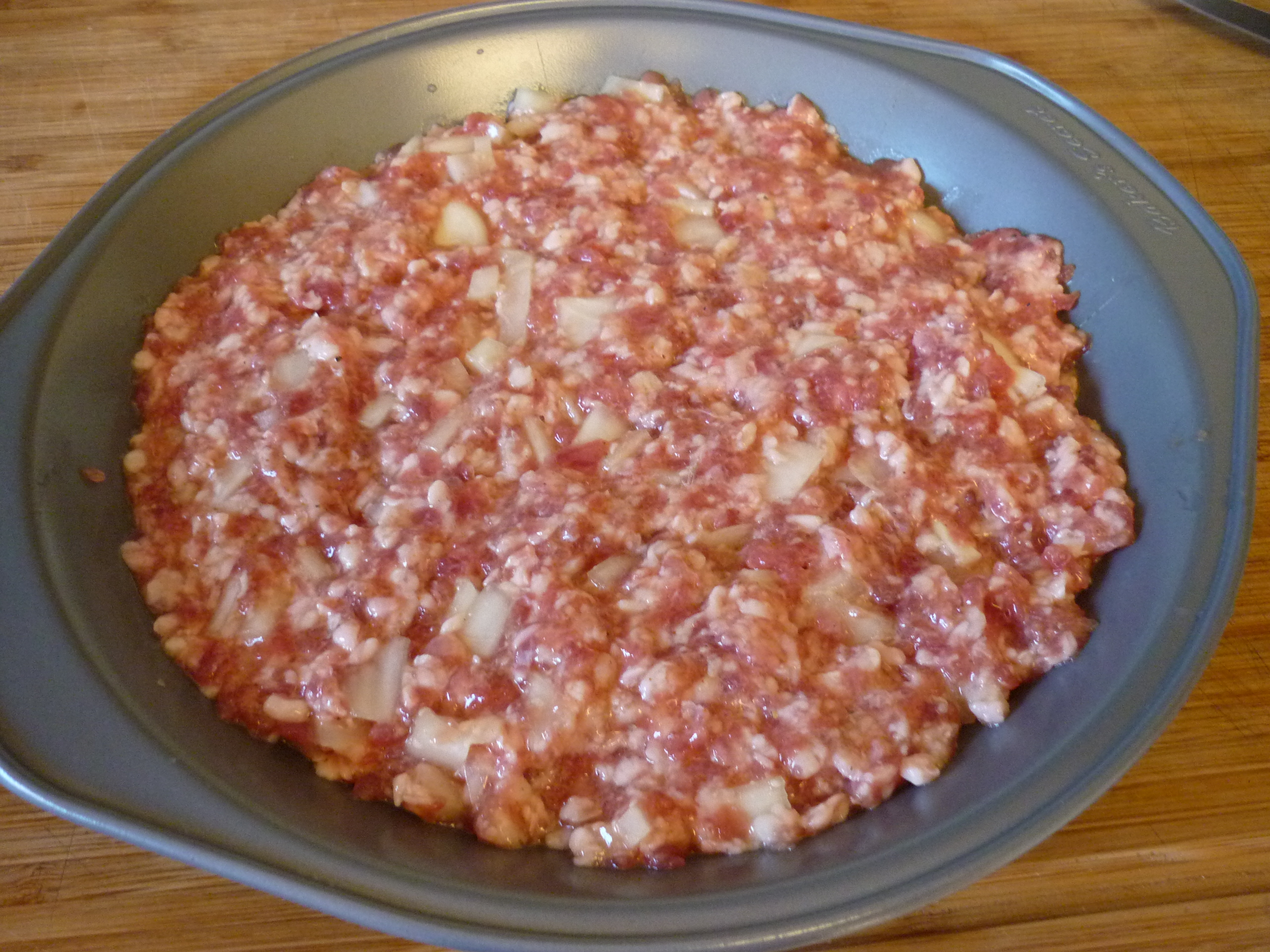
Place mixture into a greased 8” pie pan. Cover and bake at 375 degrees F for thirty minutes.

Remove from oven and drain off accumulated fat.

Cut slits in pie crust and place atop pork mixture, pinching along the top to seal.

Bake for 40-45 minutes until crust is brown and flaky. Let cool completely before serving.

Cold Pork Pie Recipe

1-1/2 pounds lean ground pork

chopped onion

2 eggs, beaten

¼ tsp. cayenne

¼ tsp. sage

2 Tbsp. Worchestershire sauce

Salt and pepper

1 pie crust

Mix everything, except crust, together and place into a greased 8” pie pan. Bake, covered, in a preheated oven at 375 degrees for 30 minutes. Remove from heat and drain off accumulated fat. Cover with crust and return to oven for 45 minutes or until the crust is brown and flaky. Allow to cool completely before serving.

My husband and I were traveling by car through Germany’s black forest back in the late 1980s when we stopped to eat dinner at a restaurant. Neither of us speak German, although I did learn two phrases before leaving that stood us in good stead for the entire trip. “Two beers, please!” and “Do you have a double room available, with a shower?” Anyway, being in a small town where English was not spoken often and in our own desire to be adventurous, we pointed at two menu items and ordered. The place was packed with people, it had a very homey atmosphere with a lot of noise. The waitress brought my food and then had to return with my husband’s because it was a platter of pork ribs piled about a foot high. I kid you not. A man entering the restaurant at that moment said a few words to my husband in a very loud voice and then patted him on the back. We have no idea what he said, but the meaning was clear. Man up! My husband did eat the whole thing. It was that good.

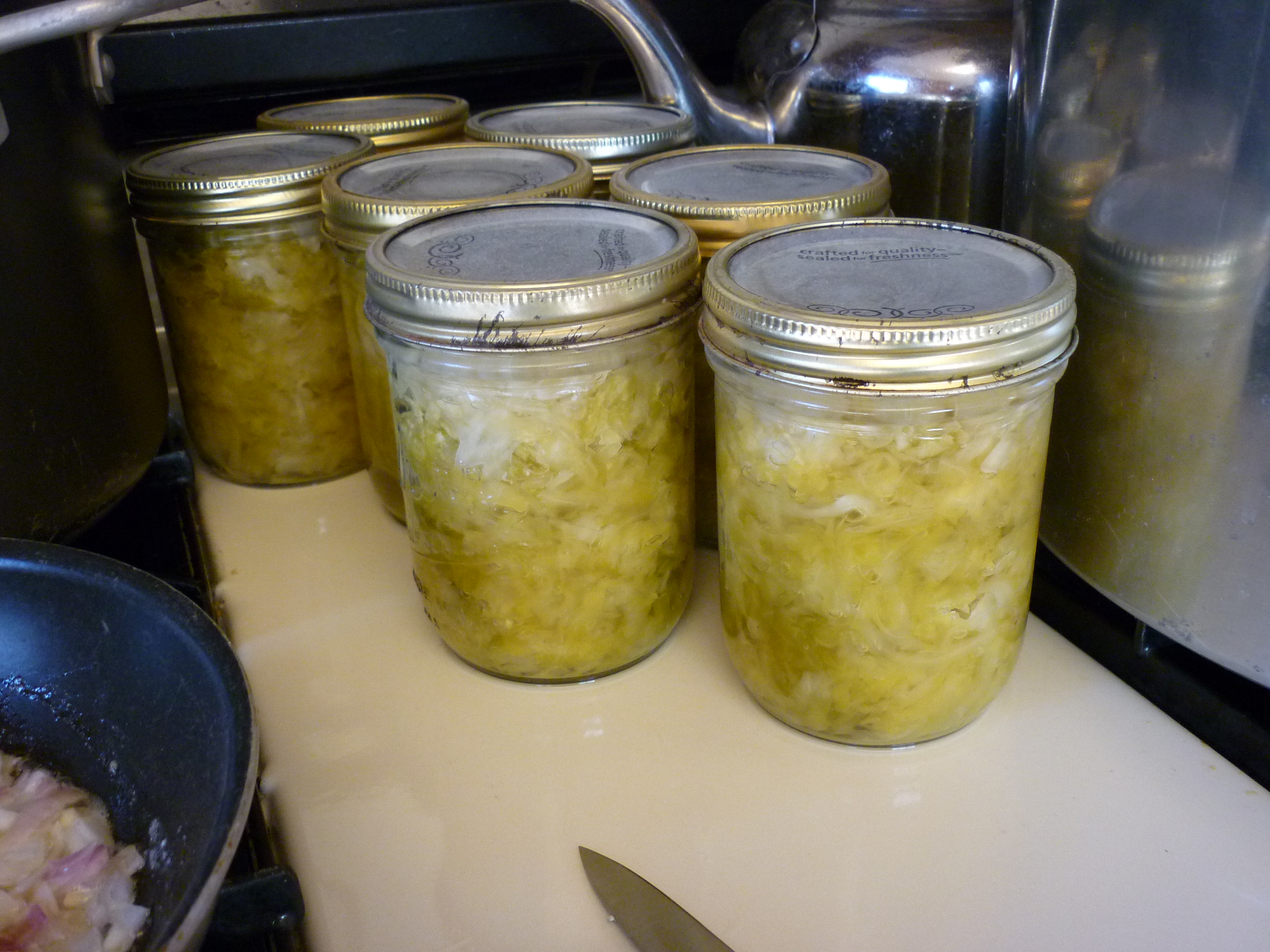
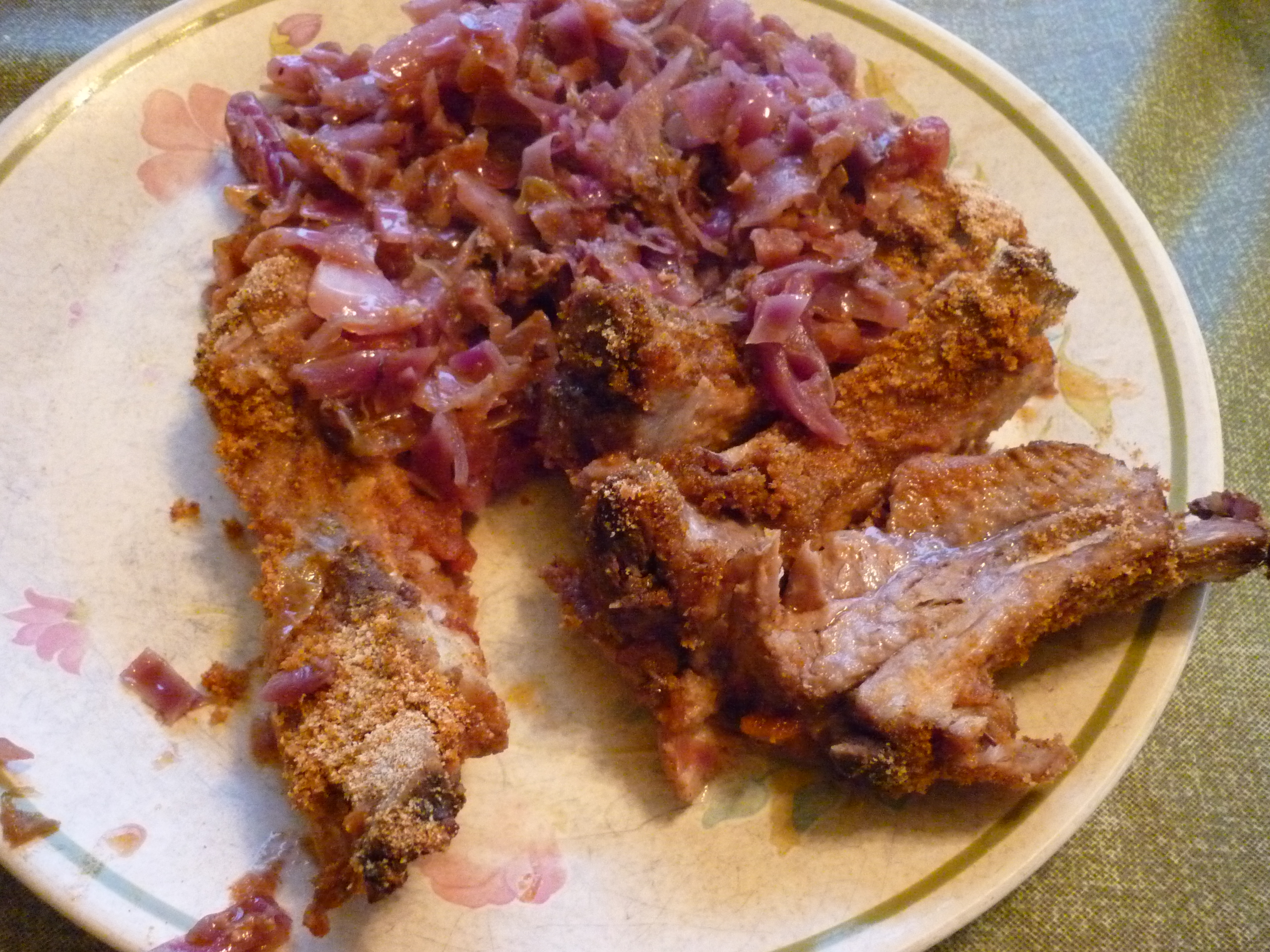
This may well be my favorite dish. I think it’s the bread crumbs sprinkled on the ribs that adds that perfect texture. The recipe comes from Sunset Magazine’s November 1990 issue. I often make my own sauerkraut and the flavors are sublime. If you don’t have homemade sauerkraut, then the next best is the kind found in plastic bags in the deli section of the grocery. Next best is the chilled kind found in the cooler. As a last resort go ahead and use the canned found on the shelf. Sauerkraut is cabbage cured with salt. That’s it.

I usually serve this dish with spaetzle and a dark pumpernickel bread. Since there are only two of us, I didn’t include any sides. I’ll demonstrate spaetzle in another post one day.

Home made sauerkraut. Yummy. The amount called for in the recipe does not have to be exact, anything close will do. Pour 1 large can (27 oz) sauerkraut, drained, into a colander and rinse with cool running water; let drain.

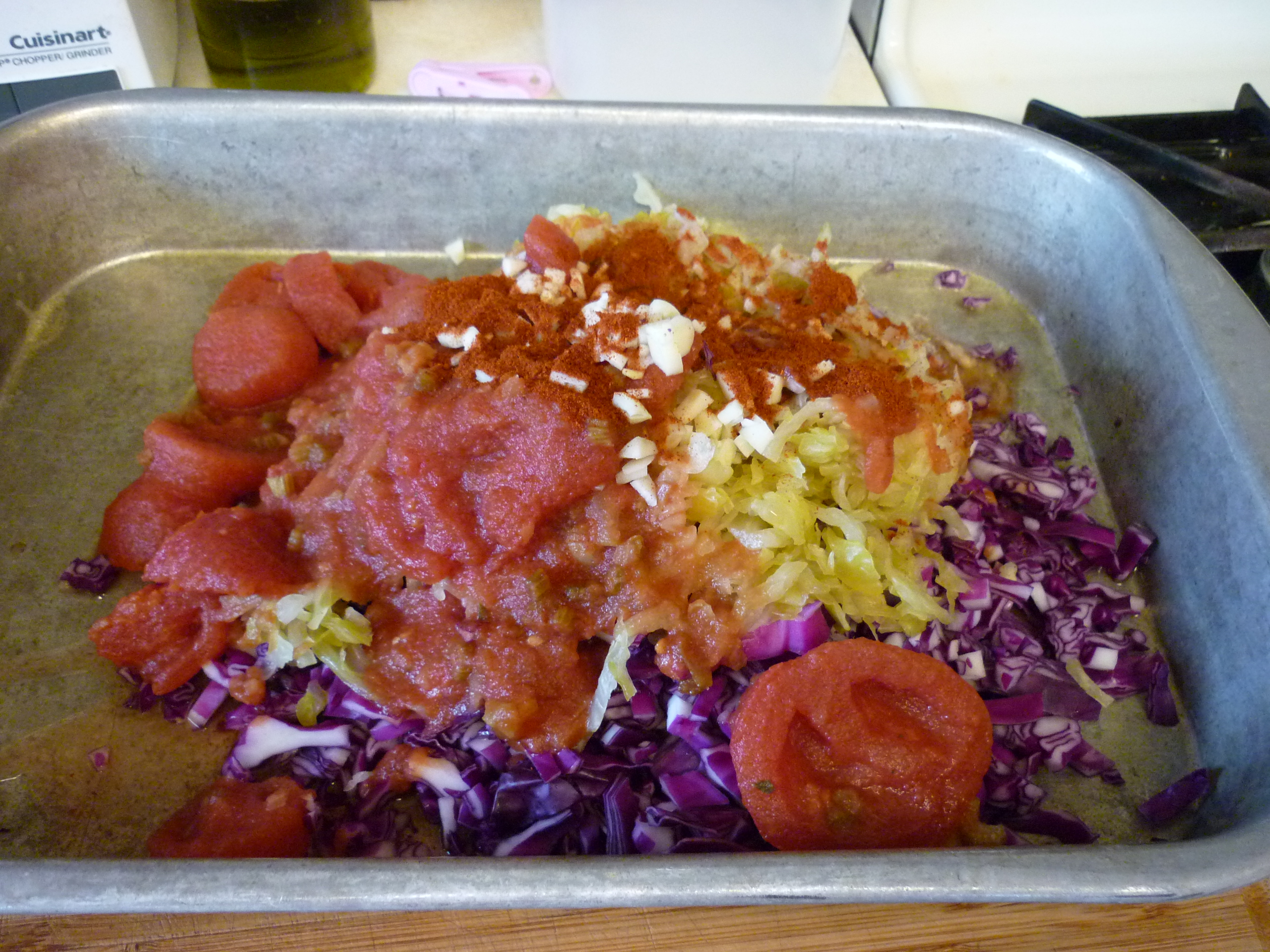
In a roasting pan about 10×14”, mix together:
4 cups shredded red cabbage
1Tbsp. hot or sweet Hungarian paprika, or regular (domestic) paprika
4 cloves garlic, minced or pressed
1 can (14-½ oz.) stewed tomatoes
sauerkraut

Mix together and spread in an even layer.
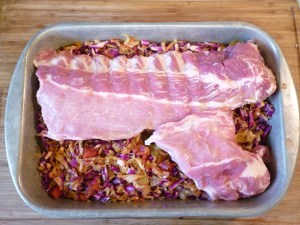
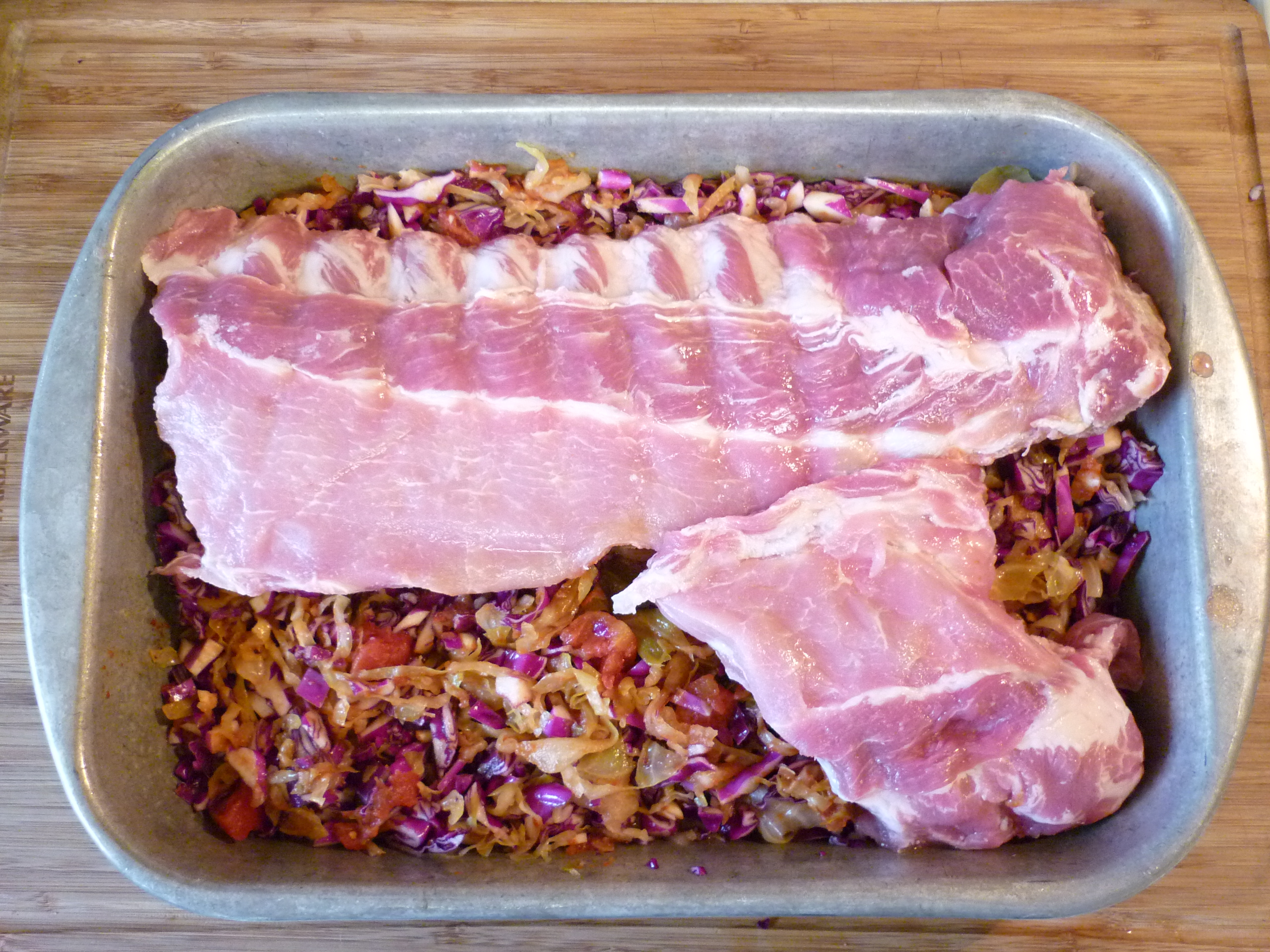
Lay 3 pounds baby back pork ribs on sauerkraut mixture, curved side up;
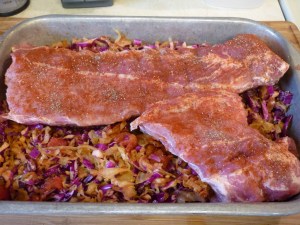
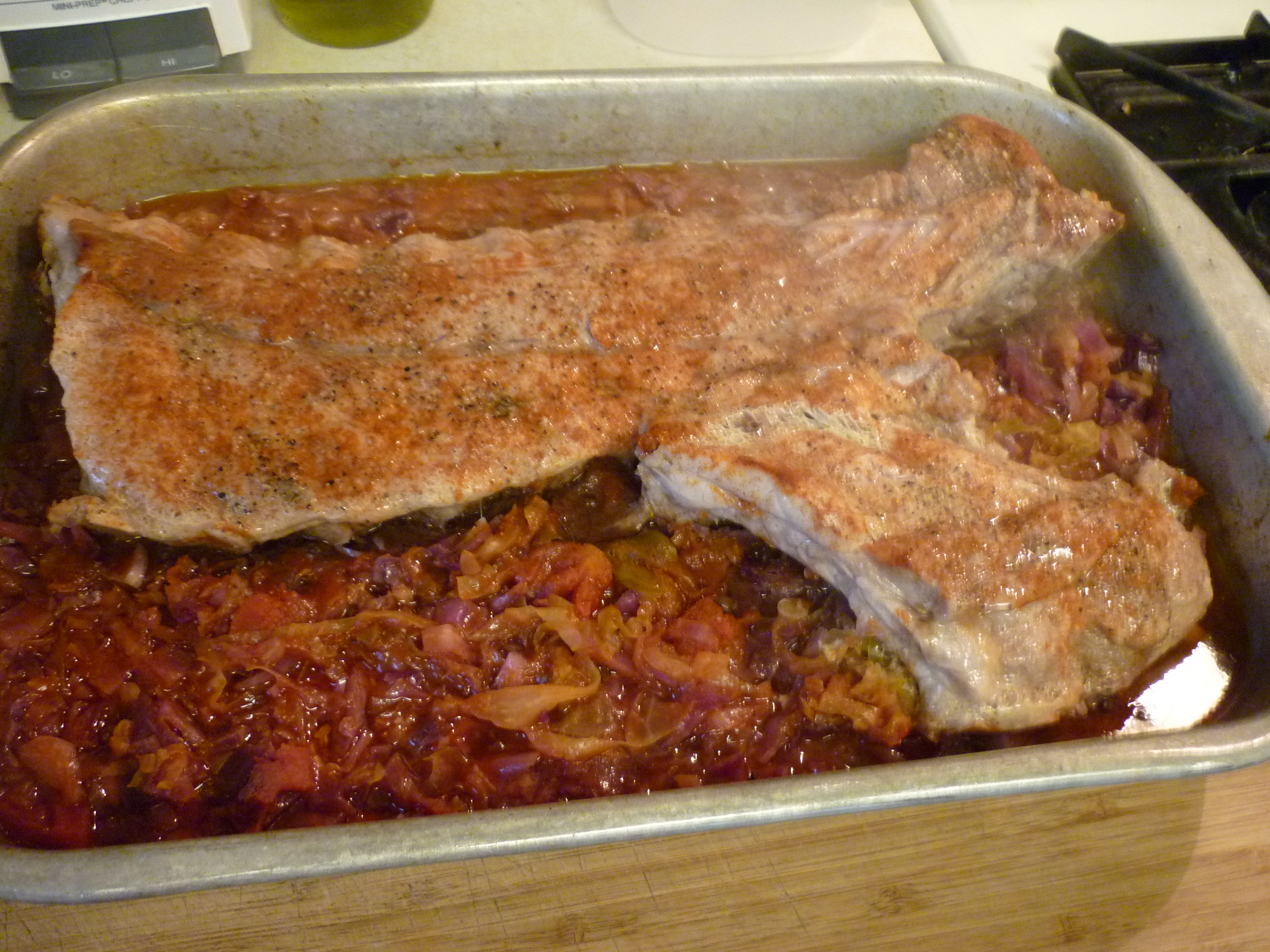
sprinkle meat evenly with pepper and about 2 teaspoons paprika. Tightly cover pan with foil. Bake in 375 degree oven for 1½ hours.

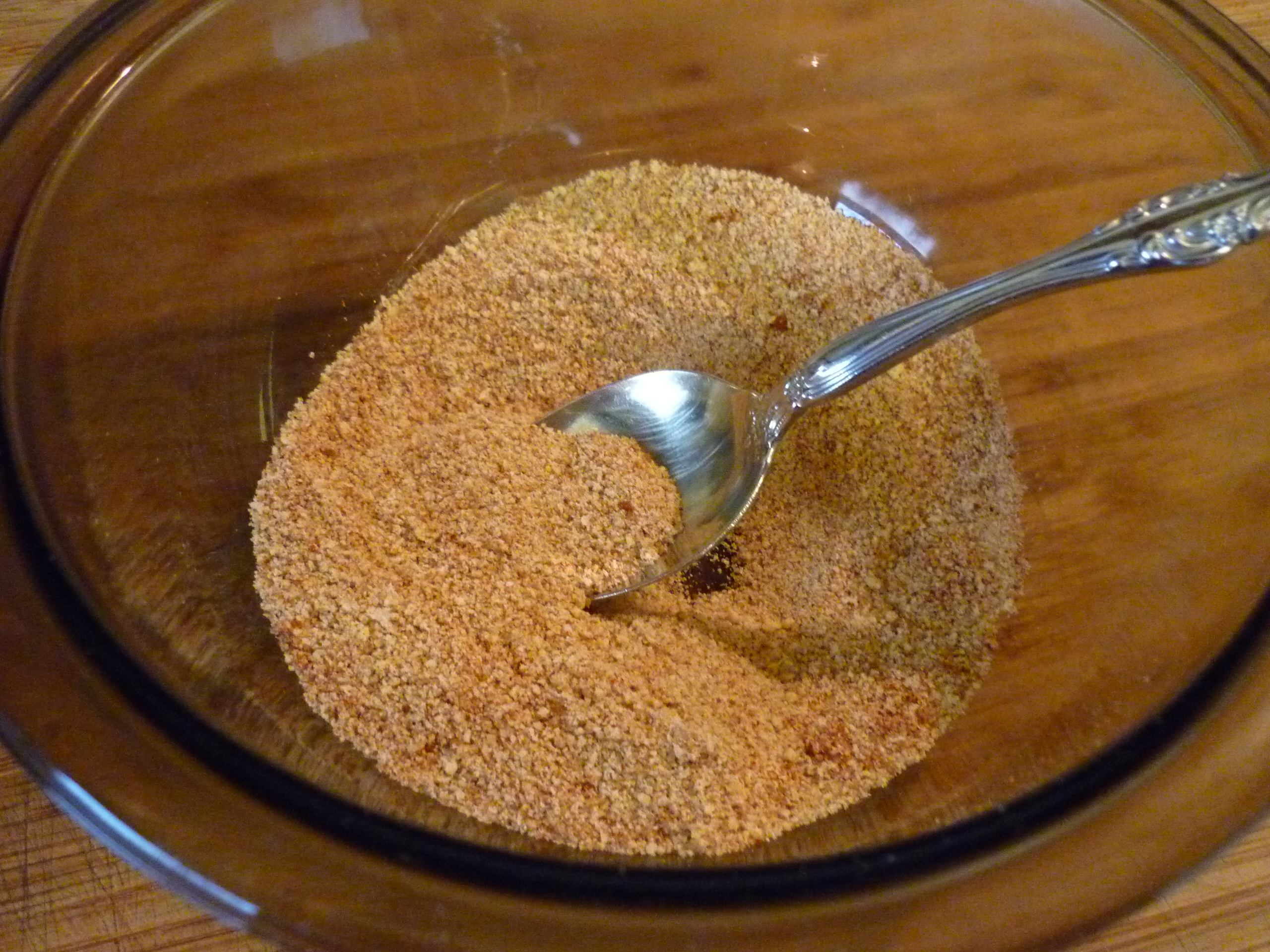
Mix together 2 teaspoons paprika and bread crumbs.

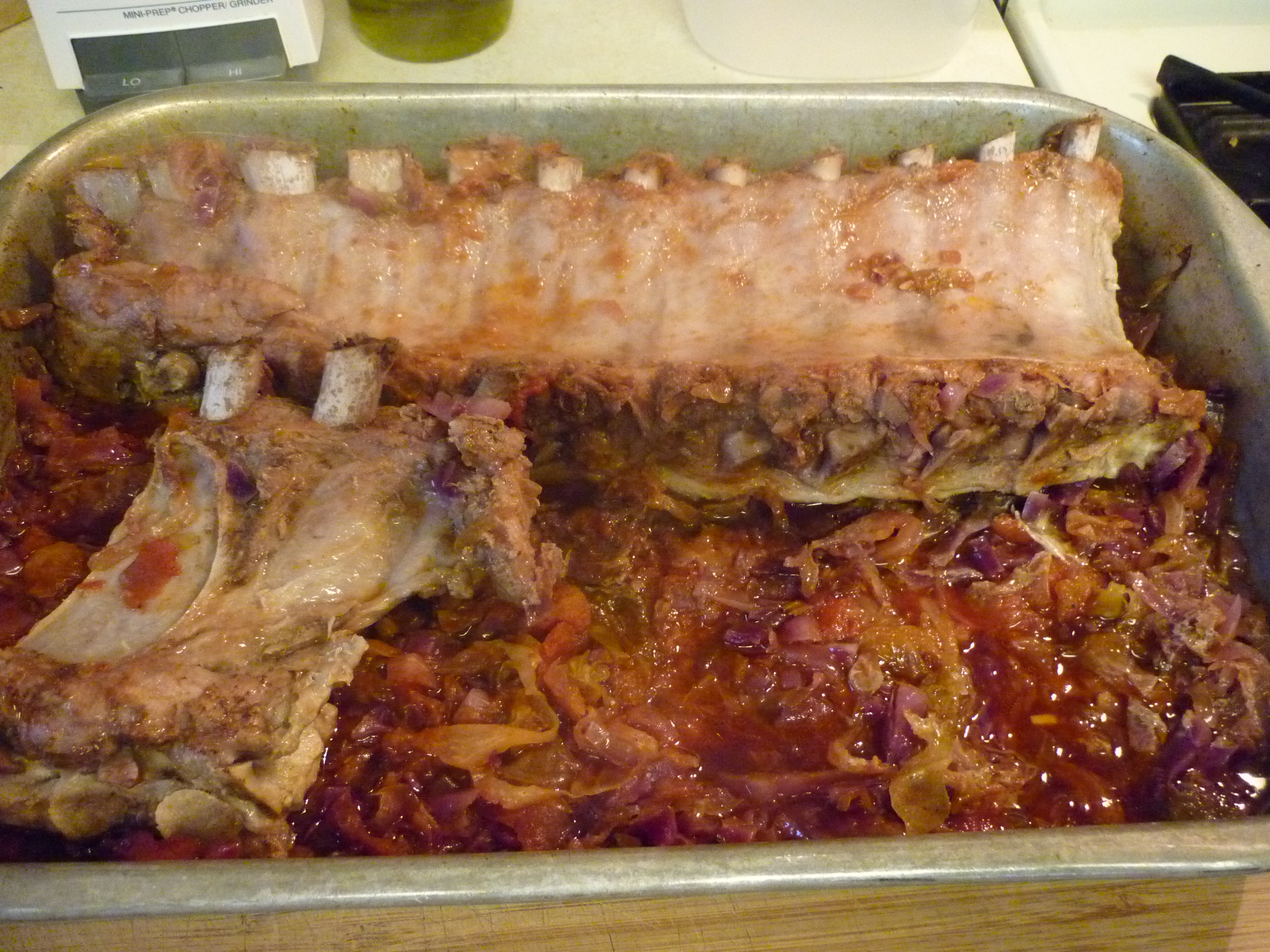
Remove foil from ribs.

Turn the ribs over.
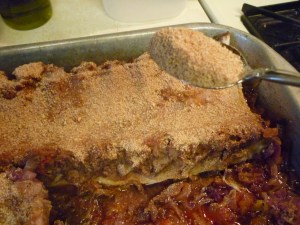
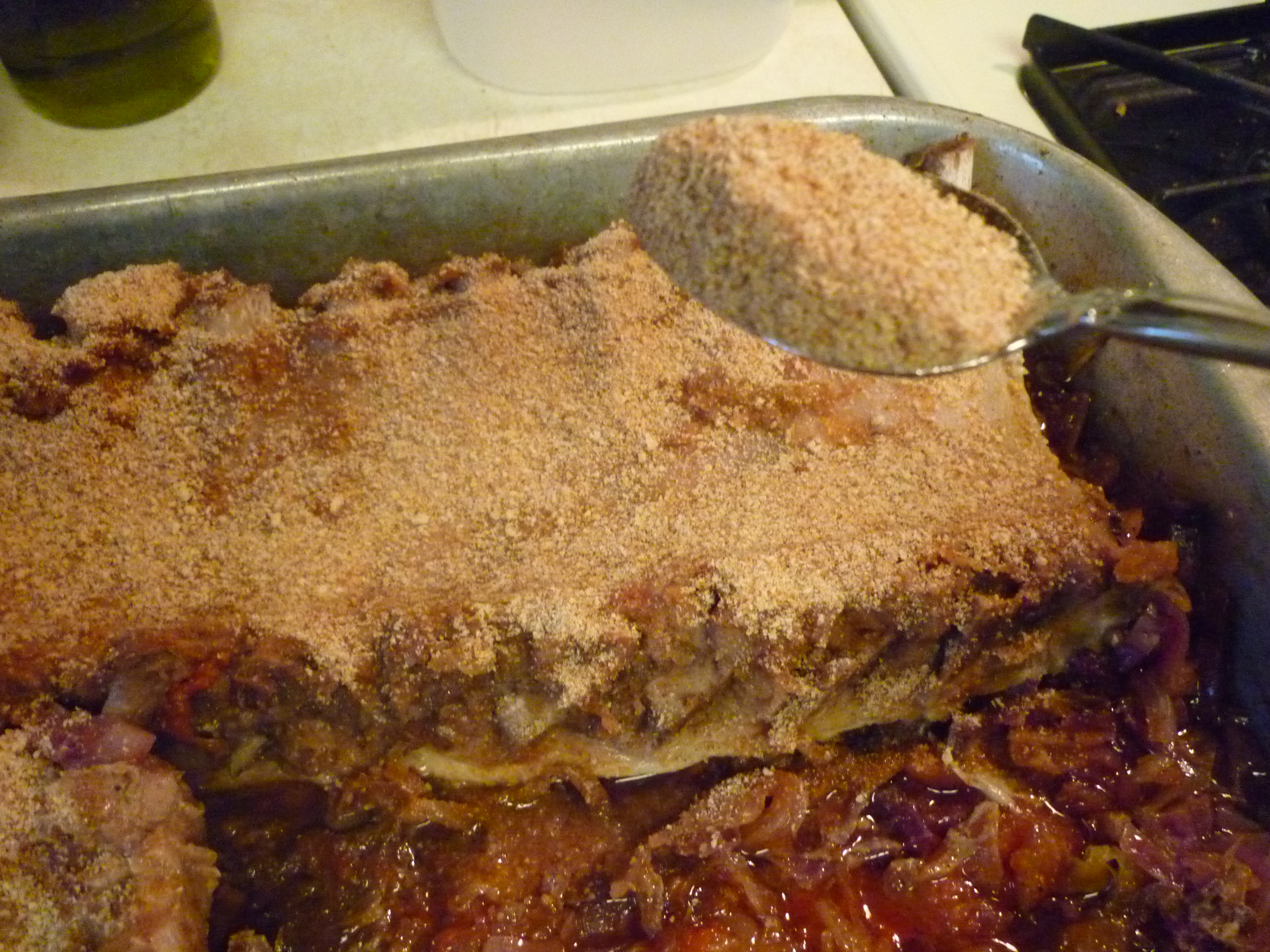
Sprinkle with bread crumbs/paprika.

Bake, uncovered, until meat is very tender when pierced and crumbs are brown, about 20 minutes longer.

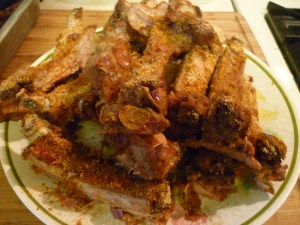
Transfer baby back ribs to a platter and spoon sauerkraut mixture into a bowl. Cut ribs apart and serve with sauerkraut. Makes 4 servings.
Baby Back Ribs with Sauerkraut

1 large can (27 oz) sauerkraut, drained

4 cups shredded red cabbage

About 3 Tbsp. hot or sweet Hungarian paprika, or regular (domestic) paprika

4 cloves garlic, minced or pressed

1 can (14-½  oz.) stewed tomatoes

3# pork baby back ribs

½ tsp. pepper

1/3 cup fine dry bread crumbs

Pour sauerkraut into a colander and rinse with cool running water; let drain. In a roasting pan about 10×14”, mix together sauerkraut, cabbage, 1 Tbsp. paprika, garlic, and tomatoes; spread in an even layer. Lay ribs on sauerkraut mixture, curved side up; sprinkle meat evenly with pepper and about 2 teaspoons paprika. Tightly cover pan with foil. Bake in 375 degree oven for 1½ hours.

Mix together 2 teaspoons paprika and bread crumbs. Remove foil, turn ribs over, and sprinkle with paprika mixture.

Bake, uncovered, until meat is very tender when pierced and crumbs are brown, about 20 minutes longer.

Transfer baby back ribs to a platter and spoon sauerkraut mixture into a bowl. Cut ribs apart and serve with sauerkraut. Makes 4 servings.

What kind?